


10 Examples of Good Laboratory Practice (GLP)
Today’s laboratories face growing challenges navigating the complexities of materials research. Even minor missteps during the R&D process can lead to compromised results, regulatory delays, or substantial financial and reputational risks. It’s more critical than ever for laboratories to ensure precision, reliability, and operational consistency. That’s where the Good Laboratory Practice (GLP) framework comes in.


GLP provides a structured approach to managing laboratory processes, ensuring that data is trustworthy, reproducible, and aligned with global standards. The need for GLP is ongoing, as shown by a 2025 review of FDA GLP warning letters which found that documentation deficiencies, quality assurance unit failures, protocol noncompliance, and final study report data-capture issues each accounted for 12% of observed GLP violations.
Embedding Good Laboratory Practice principles into R&D laboratory workflows enables organizations to achieve both compliance and innovation. Let’s explore GLP and ten practical examples of how it strengthens laboratory research and operations.
What is Good Laboratory Practice (GLP)?
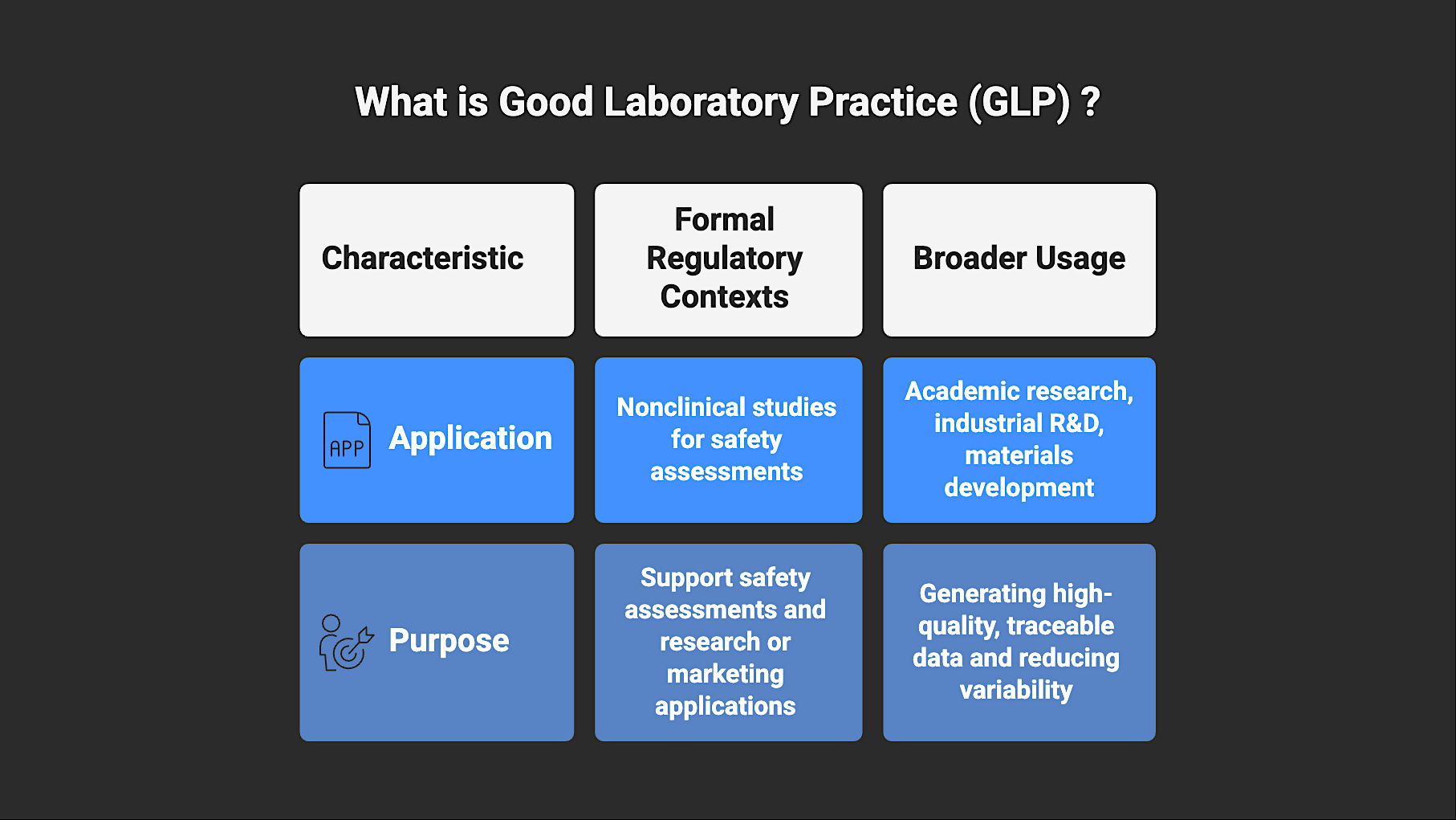
Good Laboratory Practice (GLP) is a set of internationally recognized principles designed to ensure that laboratory data is accurate, consistent, and reliable. In formal regulatory contexts, GLP applies primarily to nonclinical studies used to support safety assessments and research or marketing applications.
The term is also used more broadly to describe strong laboratory quality practices across academic research, industrial R&D, and materials development. In both cases, GLP supports the same core goals: generating high-quality, traceable data and reducing variability that could compromise research outcomes.
Why is GLP important?
Good Laboratory Practice fosters a structured environment that ensures research reliability and compliance. It enables laboratories to produce accurate and reproducible results that form the backbone of credible scientific research by minimizing variability and errors.
GLP also promotes innovation by creating a foundation for exploring new methodologies, technologies, and materials. For instance, in materials informatics, where diverse data sources and complex processing pipelines are common, GLP frameworks ensure the integrity of input data and validate algorithms used in predictive modeling. They allow researchers to focus on breakthrough advancements while maintaining strict quality controls.
Besides supporting compliance, GLP contributes to global challenges such as public health and sustainability. Reliable research driven by GLP helps accelerate the development of safer pharmaceuticals, sustainable materials, and advanced manufacturing processes, reinforcing its critical role in laboratory operations.
When are good laboratory practices required?
Formal GLP principles are reflected in frameworks from authorities such as the OECD and FDA, with additional guidance from organizations such as the WHO. Requirements apply when nonclinical laboratory data is intended for regulatory use, such as supporting safety assessments or research and marketing applications.
The trigger is not the lab setting itself, but whether the data will be used to support a regulated decision. For materials-focused R&D teams, this means GLP may not govern every exploratory experiment, but it becomes important when study results need to withstand external scientific or regulatory review.
Key GLP Regulatory Frameworks to Know
A GLP regulatory framework is the regulatory structure that defines how Good Laboratory Practice is applied and assessed. These frameworks may vary by jurisdiction, regulatory authority, product type, study purpose, or recordkeeping system.
Here are some of the most common GLP frameworks and related regulatory references that R&D teams need to know:
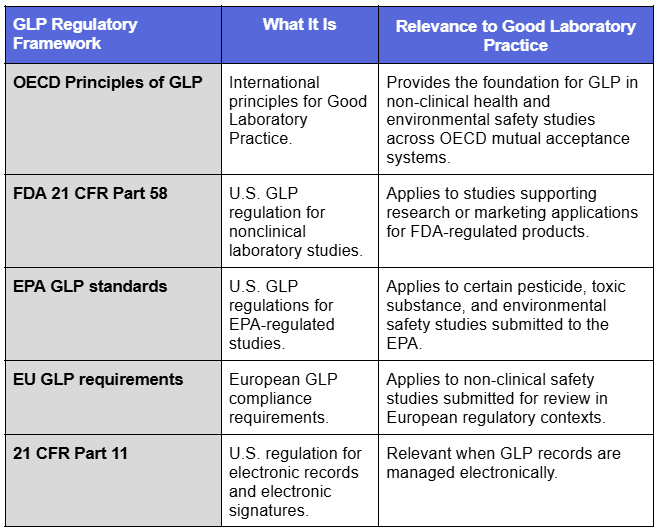
Identifying the applicable framework early helps R&D and quality teams align study planning and data systems with the expectations that may apply when study data is reviewed or submitted to regulators.
GLP vs. GMP vs. GCP: What’s the difference?
As laboratory work moves from research toward production or clinical evaluation, other quality frameworks may apply alongside or after GLP. These frameworks are sometimes confused because they all support regulated development, but they govern different types of work.
The table below shows how Good Laboratory Practice (GLP), Good Manufacturing Practice (GMP), and Good Clinical Practice (GCP) differ by scope and purpose.
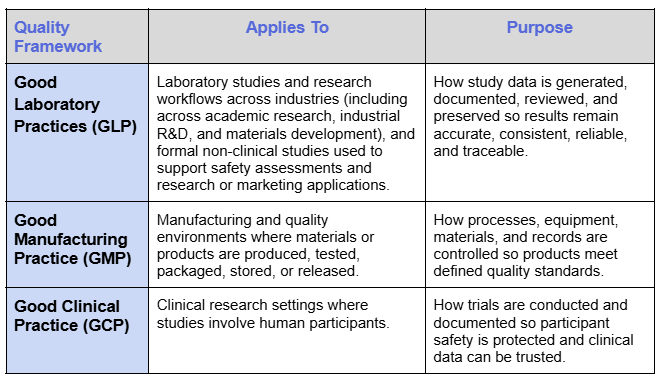
For materials R&D teams, knowing which framework applies affects how data moves from experimentation to validation, scale-up, and review. GLP keeps the laboratory record organized and defensible, so later QA, QC, regulatory, and production decisions are based on clear evidence.
7 Benefits of Good Laboratory Practice
For R&D, QA, QC, regulatory, and lab operations teams, GLP offers several practical benefits:
- Data Quality, Integrity, and Traceability – GLP gives laboratory teams a reliable record of how data was generated and maintained. Teams can follow the path from study setup to final output and judge whether the data is complete enough to support a decision.
- Regulatory Compliance – GLP gives laboratories a structured way to meet recognized requirements for study conduct and documentation. Audits, inspections, and submissions become easier to support when records are organized from the start.
- Reproducible Research – Clear procedures make studies easier to repeat under comparable conditions. In materials R&D, repeatability is essential because small process changes can alter performance.
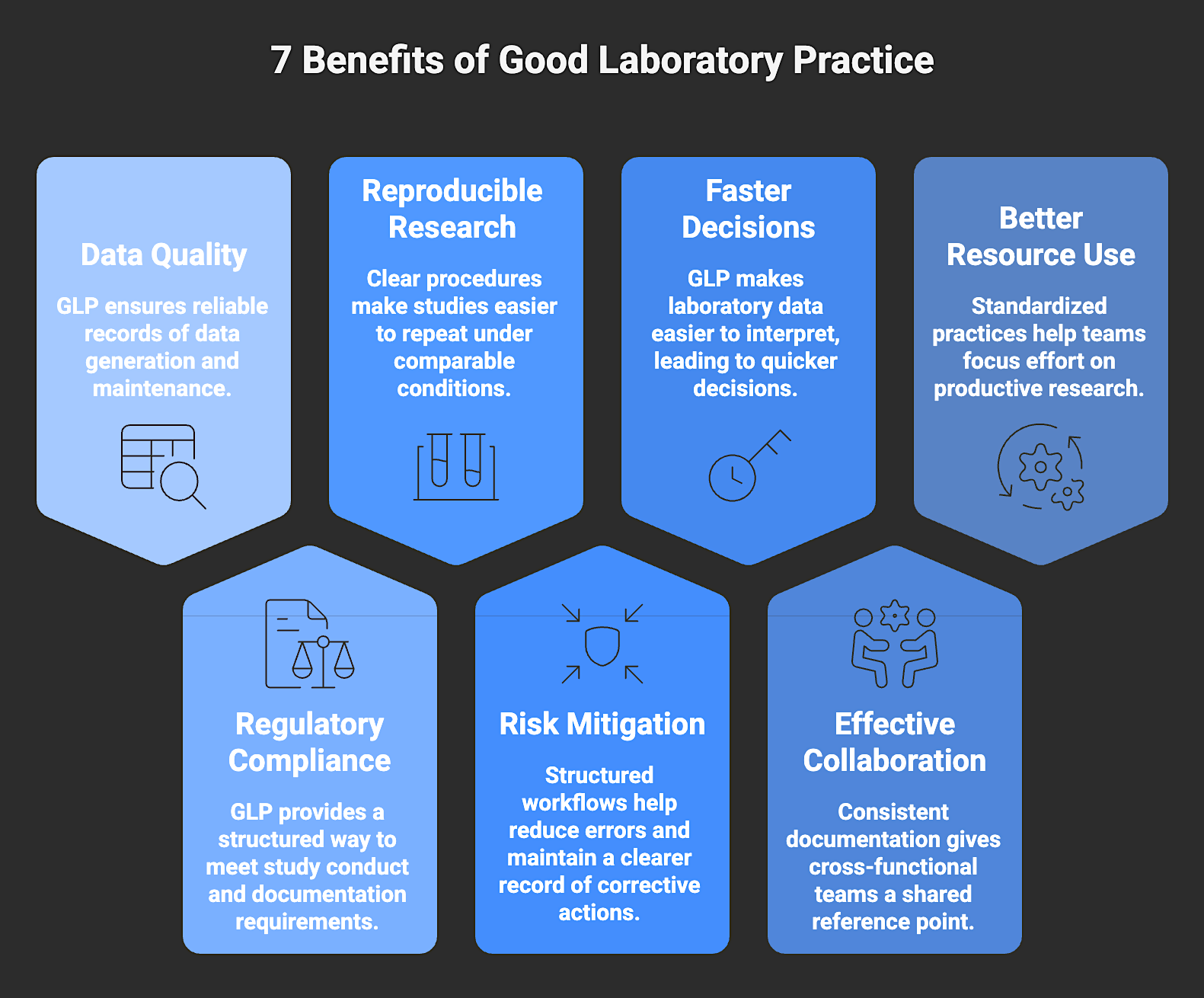
- Risk Mitigation – Structured workflows help laboratories reduce errors, detect deviations earlier, and maintain a clearer record of corrective actions. For R&D and quality teams, that lowers the chance that unreliable data will influence later study, scale-up, or compliance risk decisions.
- Faster R&D Decisions – GLP makes laboratory data easier to interpret. Teams can spend less time clarifying how results were generated and more time deciding which direction to take next.
- More Effective Collaboration – Consistent documentation gives cross-functional teams a shared reference point. Cleaner handoffs reduce friction as work moves from research into quality, regulatory, or production review.
- Better Use of Lab Resources – Standardized laboratory practices help teams focus effort on productive research. Less time is spent rechecking unclear results or recreating missing context.
Key Components of Good Laboratory Practice (GLP)
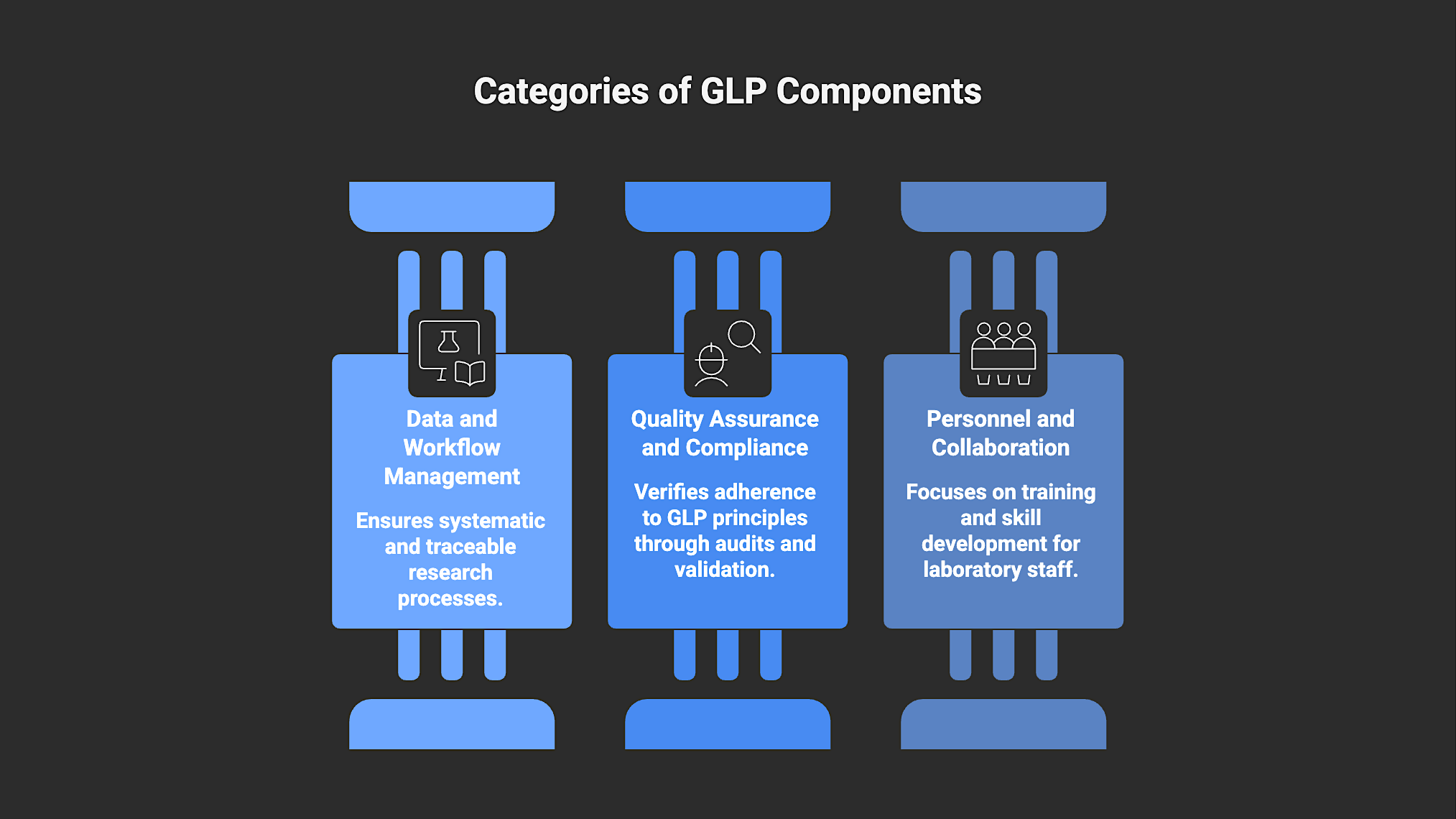
Good Laboratory Practice (GLP) consists of seven core components in three categories that provide a structured foundation for reliable and reproducible research:
Data and Workflow Management
1. Study Protocols
Clearly defined objectives, methodologies, and evaluation criteria are the backbone of GLP. Protocols ensure that every experiment follows a systematic approach, reducing variability and aligning research activities with specific goals.
2. Traceability and Archiving
Maintaining a robust system for archiving data and records ensures long-term traceability. Proper storage prevents deterioration and guarantees that study data remains accessible for audits or future research.
3. Standard Operating Procedures (SOPs)
SOPs are detailed, written instructions designed to standardize laboratory processes. SOPs minimize errors and variability by ensuring consistency in procedures, leading to more reliable and reproducible results.
Quality Assurance and Compliance
4. Quality Assurance
Independent reviews and audits are essential for verifying adherence to GLP principles. A dedicated Quality Assurance (QA) team monitors processes, identifies deviations, and ensures that corrective actions are taken promptly to maintain high standards.
5. Validated Equipment and Facilities
The reliability of research depends on the tools and environment used. Regular maintenance, calibration, and validation of equipment, as well as proper facility design, are necessary to ensure accurate and consistent results.
6. Comprehensive Documentation
Accurate and thorough recordkeeping is critical to GLP. Documentation requirements include maintaining raw data, metadata, procedural details, and audit trails, all of which create a clear history of activities for regulatory or internal review.
Personnel and Collaboration
7. Personnel Training
Proper training ensures that laboratory staff are competent and well-equipped to handle GLP processes. Continuous education and skill updates help minimize human error and maintain a culture of excellence.
10 Good Laboratory Practice Examples
Here are ten detailed Good Laboratory Practice examples with actionable tips that show how labs can turn GLP principles into consistent, reviewable workflows across the R&D process.
1. Ensuring Data Integrity
Data integrity is about the accuracy, consistency, and reliability of data throughout its lifecycle. It's essential in materials research because datasets drive decisions about material performance and production processes. Without integrity, results become unreliable, leading to incorrect conclusions or regulatory penalties.
GLP Example: In a semiconductor research lab, consolidating fragmented datasets into a centralized system ensures consistency and prevents errors during analysis. Validations conducted at each stage of the data pipeline help maintain accuracy for production-scale applications.
Actionable Tip: Leverage an AI-guided materials informatics platform to aggregate and standardize datasets. Use its AI-driven tools to validate data accuracy, strengthen data governance, and maintain robust audit trails, ensuring reliable outcomes at every stage.
2. Establishing Standard Operating Procedures (SOPs)
SOPs are detailed written instructions that standardize procedures to reduce variability and errors. They ensure all personnel follow the same protocols, making research reproducible and reliable.
GLP Example: A nanomaterials lab implements standardized deposition procedures through detailed SOPs. This practice guarantees consistent properties across batches, meeting the specifications required for advanced coatings.
Actionable Tip: Digitize SOPs and monitor adherence with tools like MaterialsZone's Collaboration Hub. Centralizing procedural guidelines enables labs to streamline their workflows and reduce inconsistencies across teams.
3. Maintaining Comprehensive Recordkeeping
GLP requires meticulous recordkeeping to ensure traceability and support reproducibility. Comprehensive records go beyond raw data to include metadata, procedural details, and intermediate calculations.
GLP Example: While investigating unexpected mechanical property variations in polymer composites, a lab's digital recordkeeping system allows researchers to trace results back to specific processing parameters and quickly identify the root cause.
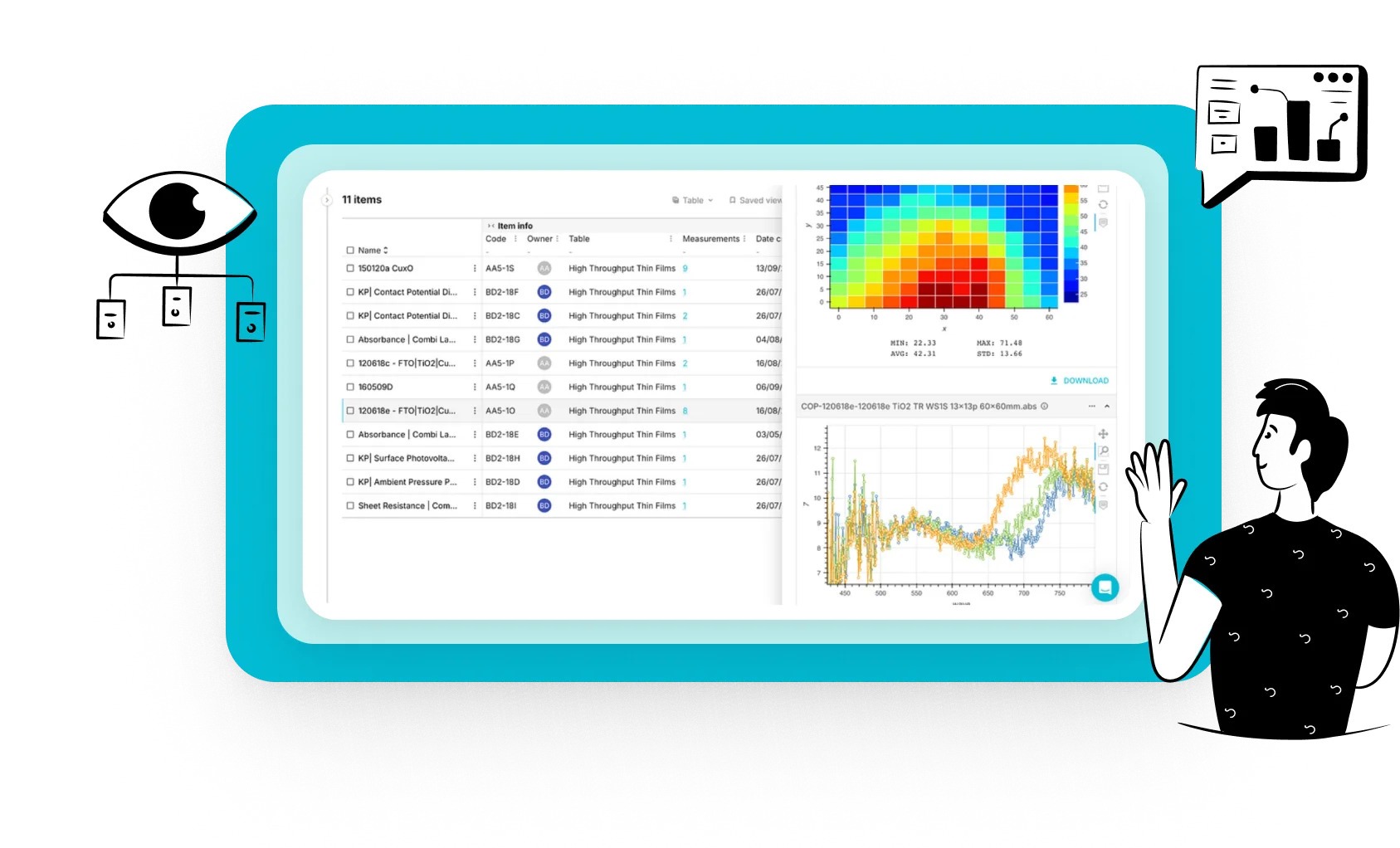
Actionable Tip: MaterialsZone's Materials Knowledge Center organizes and standardizes data from various sources, ensuring long-term compliance and easy retrieval. With this tool, labs can efficiently manage complex datasets and enhance collaboration.
4. Conducting Regular Staff Training
GLP emphasizes the need for trained personnel to minimize errors and maintain compliance. As research technologies evolve, ongoing training ensures that staff stay proficient in emerging tools like AI agents and new methodologies.
GLP Example: Researchers at a bio-based materials lab complete training on the procedures and documentation requirements tied to their assigned study responsibilities. This training helps ensure that study activities are performed consistently and that the resulting records can be reviewed with confidence.
Actionable Tip: Offer specialized training programs focused on machine learning applications in materials design or data analytics, so teams can leverage advanced technologies to accelerate research and innovation.
5. Implementing Traceable Workflows
Traceable workflows document every step of a process to ensure accountability and simplify issue resolution. They are especially important when scaling from lab research to industrial production, where inconsistencies can lead to defects.
GLP Example: During the production of aerospace ceramics, digital workflow mapping ensures that every batch meets stringent requirements. When a discrepancy occurs, the system identifies the specific step needing correction.
Actionable Tip: Use an advanced materials informatics platform to document and automate workflows, and link each step to a unique identifier. This comprehensive traceability ensures consistent results from R&D through to production while enabling quick resolution of process deviations.
6. Validating Equipment and Software
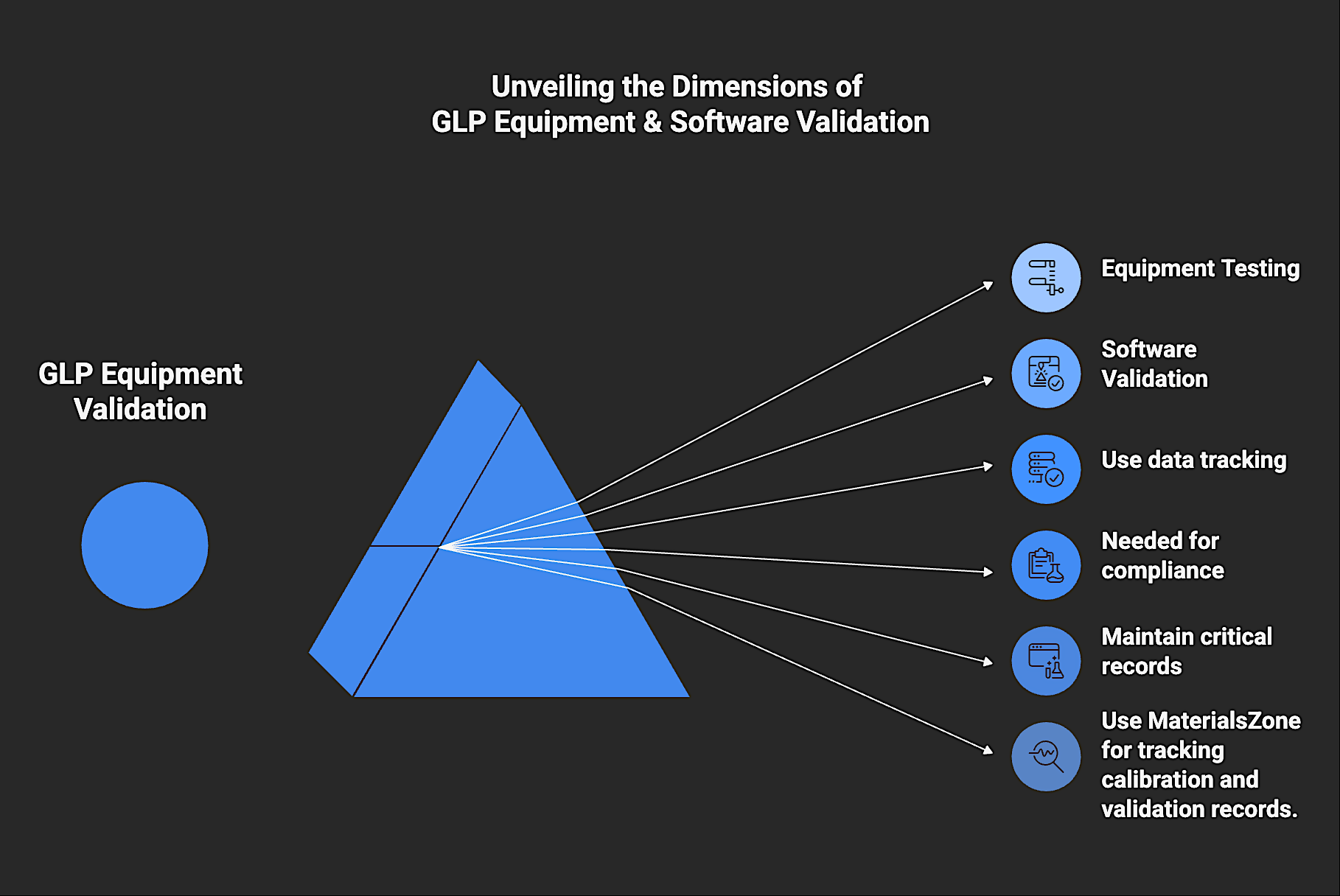
GLP requires laboratory equipment used in a study to be properly controlled so results remain reliable. Computerized systems used for GLP data should also be validated according to their role in the study. Faulty equipment or uncalibrated tools can introduce variability, compromising results and compliance.
GLP Example: A team testing advanced coatings performs regular validation of their spectroscopy equipment. They also verify simulation software by comparing its predictions against experimental data to confirm reliability.
Actionable Tip: Integrate MaterialsZone's data tracking features to monitor calibration schedules and maintain validation records for all critical lab instruments. Tracking this data helps maintain equipment reliability and alignment with GLP requirements.
7. Ensuring Regulatory Compliance
Regulatory compliance under GLP ensures laboratory processes meet industry standards. It's critical for industries like aerospace, pharmaceuticals, and advanced materials, where regulatory audits determine product approval.
GLP Example: A lab generating non-clinical safety data for a new chemical additive uses controlled study records and reviewable reports to support regulatory submission requirements.
Actionable Tip: Streamline regulatory audits by automating compliance reporting with a R&D platform that includes built-in reporting tools. They reduce the risk of errors and provide labs with a reliable mechanism for meeting industry standards.
8. Facilitating Real-Time Collaboration
Cross-disciplinary collaboration is essential in materials research, where expertise from chemistry, engineering, and physics often converges. GLP can improve collaboration by giving teams a shared, reviewable record of study activity.
GLP Example: A biodegradable plastics research team uses a shared platform to evaluate mechanical properties and degradation data simultaneously, which enables rapid decision-making and smoother coordination between departments.
Actionable Tip: Foster seamless teamwork by utilizing MaterialsZone's Collaboration Hub for real-time data sharing and analysis. Teams can work together more efficiently, no matter their location or discipline.
9. Automating Routine Tasks
Repetitive tasks like tensile test analysis and data preprocessing consume valuable time and introduce human error. Automation of workflows and tasks improves efficiency, ensures consistency, and aligns with GLP's emphasis on accuracy. However, in a GLP environment, automation should preserve the traceability of study data and the ability to review how results were generated.
GLP Example: Automation of spectral data analysis in a nanocomposite lab ensures uniformity in results and frees researchers to focus on designing new experiments.
Actionable Tip: MaterialsZone integrates automation for data processing and analysis so labs can eliminate repetitive tasks and focus on innovation.
10. Performing Continuous Process Improvement
GLP records can support continuous improvement by helping teams identify recurring issues and improve study quality over time. For instance, iterative improvements can lead to advancements in material properties like durability, conductivity, or strength.
GLP Example: Analytics-driven workflow optimization in a battery materials lab improves energy density while reducing waste in production processes. This iterative improvement strategy enhances both performance and sustainability.
Actionable Tip: Leverage MaterialsZone's Visual Analyzer to identify inefficiencies in workflows and optimize processes for better performance outcomes.
How Materials Informatics Supports Good Laboratory Practices
Good Laboratory Practices (GLP) promote reliable and innovative laboratory research across industries. They provided the structure that ensures data accuracy, reproducibility, and compliance, while enabling laboratories to meet industry standards. The GLP examples display how it empowers labs to address the complexities of modern materials research with confidence and precision.
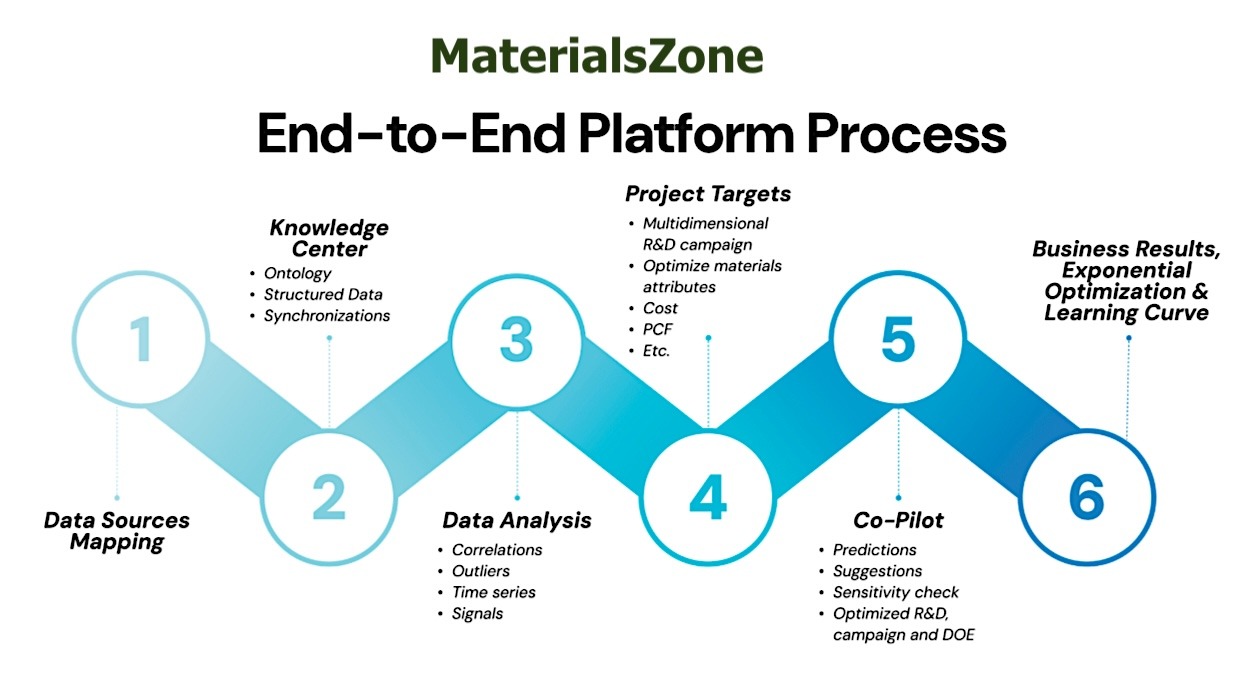
MaterialsZone uses materials informatics to make Good Laboratory Practices easier to sustain in complex R&D environments. By centralizing lab data and preserving the context behind each result, the platform makes GLP-aligned records actionable across teams in AI-guided R&D. The result is a faster, smarter path to better materials-based products.
Book a MaterialsZone demo to discover how it helps labs connect GLP to AI-guided R&D.

.png)
