Top 8 Product Carbon Footprint Analysis Software Solutions
Did you know that your products’ carbon footprint is effectively set before the first pilot batch even leaves the lab? Even if not, you’re probably feeling the pressure from regulators and clients to treat CO₂ per unit as a hard compliance metric across your portfolio.


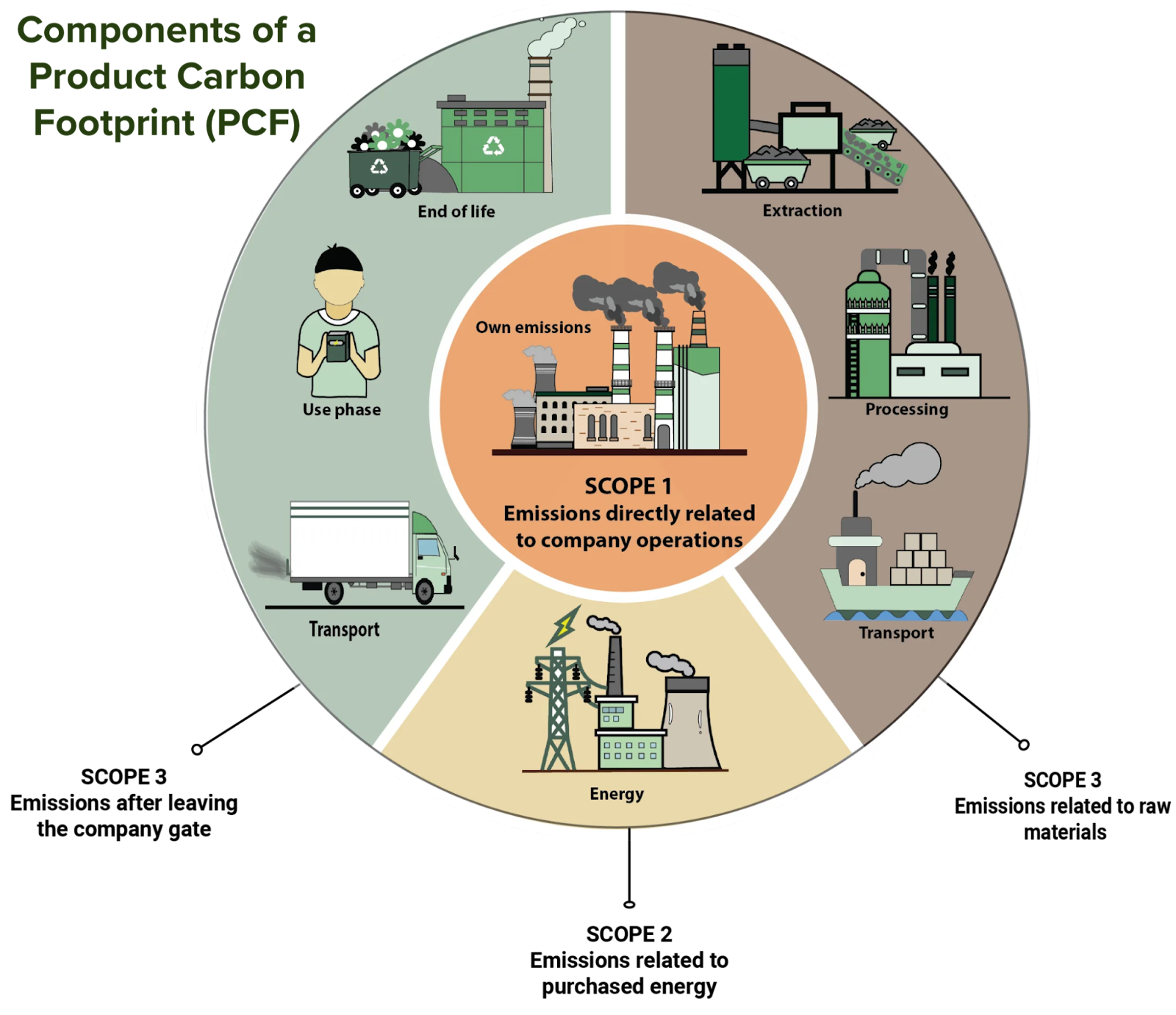
Analyzing and optimizing product carbon footprints (PCFs) is a delicate game of control. On one hand, 80% of a product’s environmental impact is determined at the design stage. On the other hand, a company’s carbon footprint can be composed of over 90% Scope 3 emissions from purchased goods and services across the wider value chain, which regulators want to reduce and limit.
This shift has a massive effect on how R&D, sourcing, QA/QC, and production teams do their job. These teams now need consistent PCFs across thousands of SKUs, built from real materials and supplier data. Product carbon footprint (PCF) software provides the structured workflows and data plumbing to manage PCFs at scale and to connect those numbers back to design and sourcing decisions.
But how should you choose the right product carbon footprint software? And who are the players you should be familiar with in the category? Let’s find out.
What are Product Carbon Footprint Analysis Software Solutions?
Product carbon footprint (PCF) software measures the greenhouse gas emissions associated with a specific product across its lifecycle, including raw materials, processing, transport, use, and end-of-life. Unlike corporate carbon accounting tools that aggregate emissions at the organizational level, PCF solutions calculate unit-level CO₂e values that can be compared across material formulations, similar products, and varying production processes.
Under the hood, these systems:
- Map bills of materials, process data, and supplier inputs to vetted emission factors (Ecoinvent, DEFRA, etc.).
- Apply recognized standards (like ISO 14067, PEF, or the GHG Protocol Product Standard).
- Produce audit-ready footprint reports that can be used in disclosures or internal design decisions.
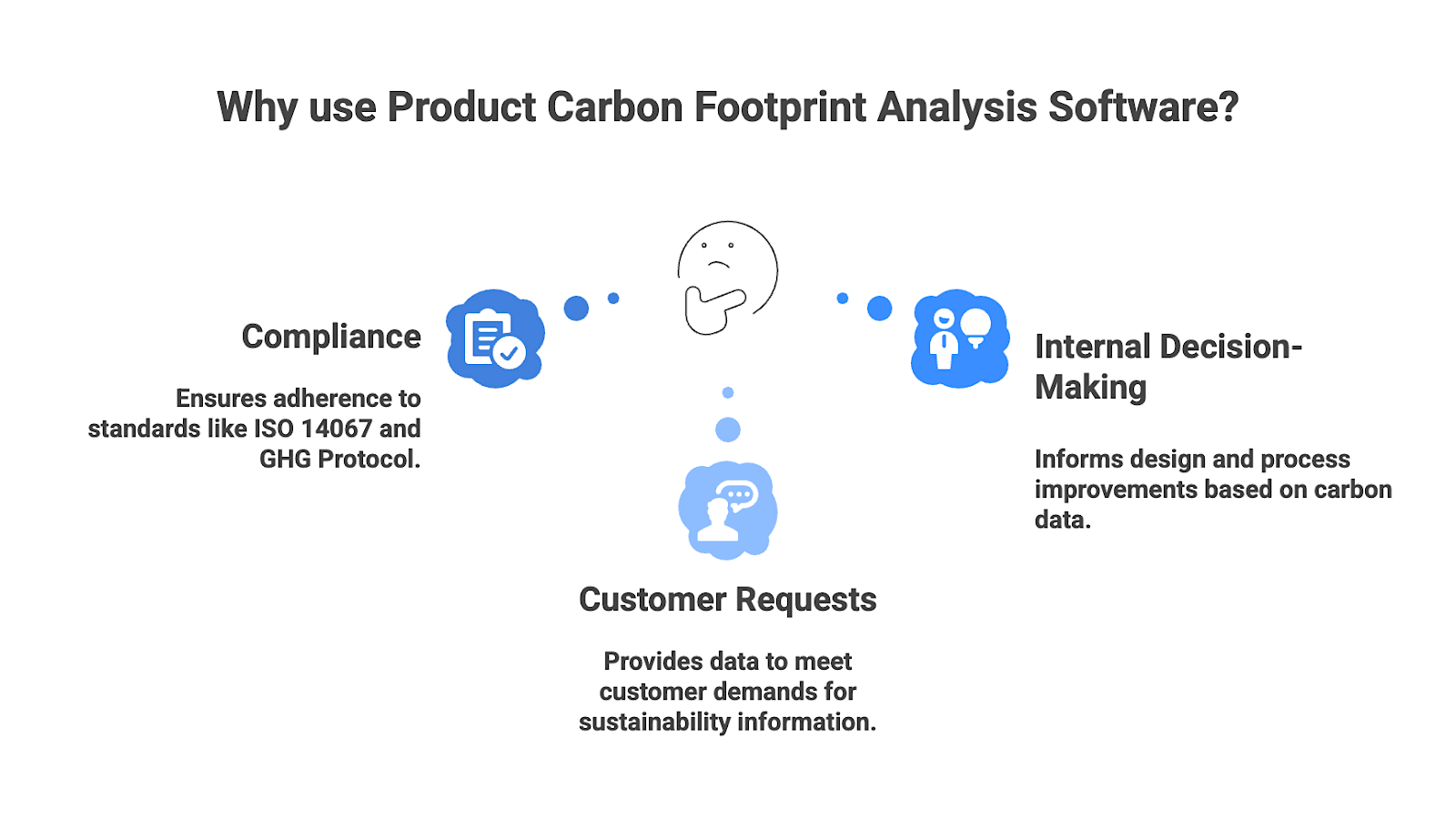
These tools are used by sustainability, R&D, and operations teams that need defensible product-level carbon data for compliance, customer requests, and internal decision-making.
Why Product Carbon Footprint Analysis Matters Now
For R&D-heavy industries, PCF software turns carbon accounting into an operational capability that supports broader environmental management frameworks such as ISO 14001. It gives teams a structured way to maintain accurate product data, update footprints as formulations evolve, and factor carbon into material and process choices early (and not after a product is already locked).
Other reasons to adopt reliable product carbon footprint analysis software include:
- Regulators are shifting to product-level rules. Frameworks such as the EU Batteries Regulation, Digital Product Passport requirements, and PEF initiatives require itemized lifecycle data from suppliers and reinforce the role of product carbon data in corporate sustainability policy.
- Large buyers expect verified carbon data and may exclude vendors who can’t provide it, making product-level carbon footprints a practical strategy for customer acquisition.
- Investors treat product CO₂ intensity as a risk indicator and push for transparency and comparability in reported metrics.
- Manual product carbon footprint analysis methods fail at scale. Complex materials data, supplier variability, and frequent design changes make spreadsheets unreliable beyond one-off studies.
7 Types of Product Carbon Footprint Analysis Software
Product carbon footprint analysis software is better viewed as a category of tools rather than a single, clearly defined solution. PCF platforms differ widely in scope, intended users, and methodology, as well as in where they support decisions across the product development lifecycle. Some tools are used early, during formulation and design, while others are applied later in sourcing, scale-up, and production.
Most organizations rely on more than one type of PCF solution to meet different analytical, compliance, and decision-making needs.
1. Product-Level Carbon Footprint Calculators
Lightweight tools for calculating CO₂e per-product, these solutions guide the end user through materials, processes, and transport inputs. With this data, they can generate unit-level results that are suitable for customer disclosures or quick comparisons between similar products.
2. Life Cycle Assessment (LCA) Platforms
Full LCA suites model environmental impacts across an entire product lifecycle. They offer granular control over system boundaries and material inventories. LCA platforms are typically employed when companies need ISO-compliant studies or Environmental Product Declarations.
3. Supply Chain Carbon Accounting Tools
These platforms, built to collect and manage supplier-specific data, often include portals for supplier uploads, along with features such as data-matching engines and automated gap-filling. These solutions are ideal when upstream Scope 3 data materially affects product footprints.
4. Corporate Carbon Management Platforms
CCM platforms are enterprise systems focused on organizational GHG inventories (Scopes 1 through 3) with optional product-level modules. Their strength is integration with ERP, energy, travel, and procurement data, ensuring carbon reporting ties back to corporate disclosures.
5. Emission Factor Databases & Modeling Engines
APIs or calculation engines that power internal tools or downstream PCF workflows, these tools ensure consistent, up-to-date carbon coefficients across products and systems.
6. Environmental Product Declaration (EPD) Generators
These purpose-built tools produce standardized EPDs aligned with ISO 14025 and EN 15804. They streamline the documentation and verification process for sectors where product transparency is required (for example, construction and many building-material categories).
7. Eco-Design & Materials Optimization Tools
This software embeds carbon considerations into early R&D and design. These tools help teams evaluate material alternatives and formulations, or test process changes before scale-up, reducing the footprint at the point of product inception.
Benefits of Product Carbon Footprint Analysis Software
Along with giving manufacturers a structured way to quantify and manage product-level emissions at scale, PCF analysis software offers five practical benefits:
- A Single Source for Product Carbon Data: Instead of scattered spreadsheets and supplier PDFs, PCF platforms centralize all relevant emissions data. They create one consistent and auditable record of each product’s footprint (which is critical for compliance and customer reporting).
- Clear Visibility Into What Drives Emissions: Modern tools break down footprints by lifecycle stage, which helps highlight which materials or processes are responsible for the largest share. Teams gain a defensible basis for deciding where reductions will have the highest impact.
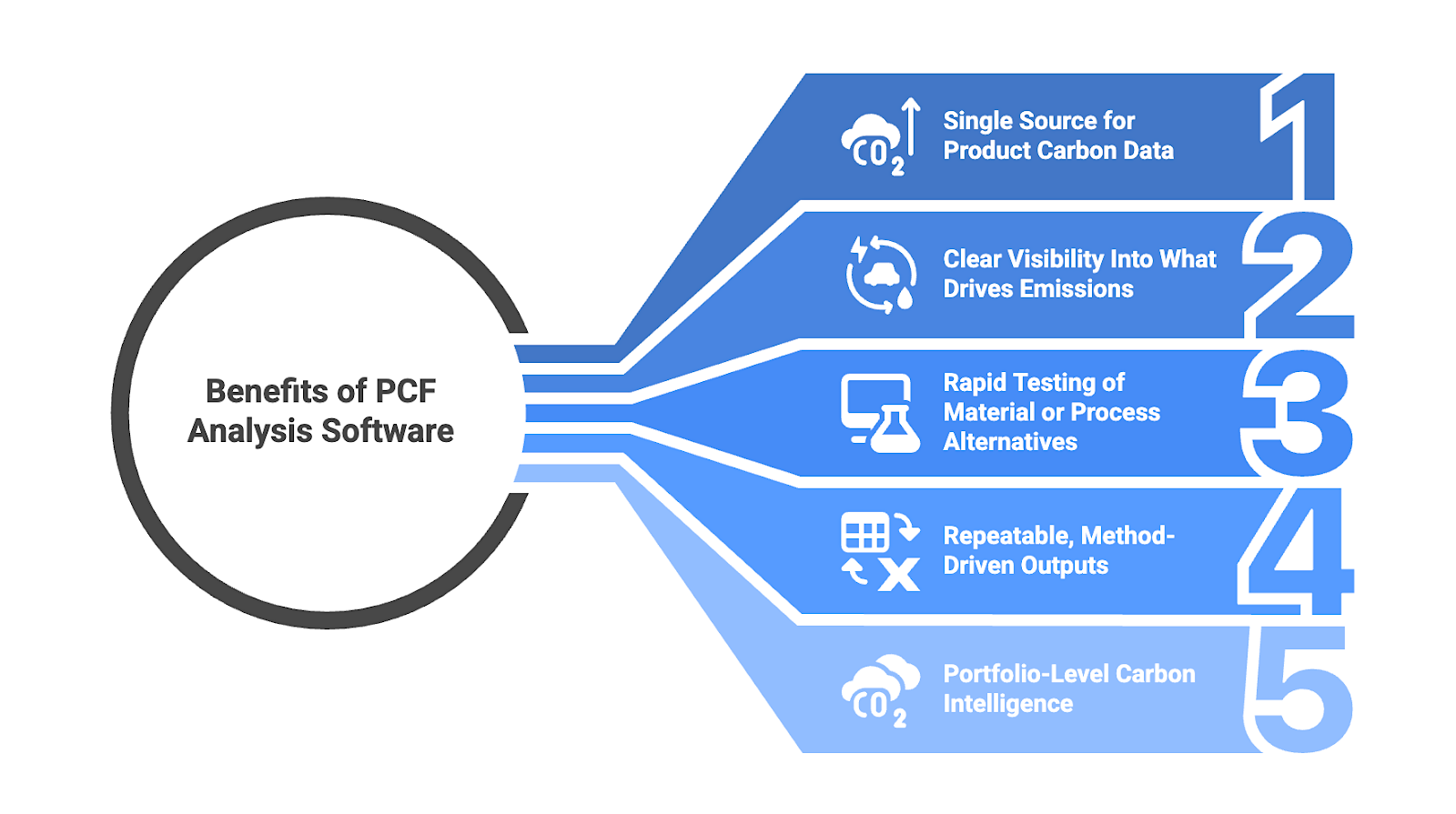
- Rapid Testing of Material or Process Alternatives: Scenario modeling lets teams test substitutions across materials, suppliers, energy sources, or production routes and see their carbon impact quickly. This process helps R&D validate lower-carbon options without committing to lengthy physical trials.
- Repeatable, Method-Driven Outputs: PCF platforms apply standardized calculation rules (like ISO 14067, PEF, GHG Protocol) and maintain clear audit trails. Consistency makes results comparable over time and reduces the risk of calculation errors that can undermine compliance efforts or supplier negotiations.
- Portfolio-Level Carbon Intelligence: Beyond individual products, companies can analyze emissions across entire portfolios. This view helps prioritize redesigns and track how changes in materials or processes move overall performance toward CO₂e reduction targets.
7 Key Features to Look for in Product Carbon Footprint Analysis Software
When you compare PCF platforms, a few capabilities tend to decide whether the tool will actually work for your teams and stand up to external scrutiny.
- Standards-Aligned Calculation Engine: The core logic should follow recognized frameworks such as ISO 14067, the GHG Protocol Product Standard, and, where relevant, PEF rules. Shared rules and boundaries keep results comparable across products and make it easier to reuse numbers in regulatory and customer reporting.
- High-Quality Emission Factor Data Access: Accurate footprints depend on good emission factors. Look for curated, regularly updated databases that cover materials, energy, logistics, and common process steps, plus the option to add your own factors for proprietary steps.
- Robust Product Modelling (BOM / Formulation Support): In chemicals, food, and advanced materials, the software must handle multi-level bills of materials, formulations, and batch-level parameters. Imports from ERP, PLM, LIMS, or MES prevent manual re-entry and keep footprints tied to real production and R&D data.
- Supplier Data Collection or Exchange: A large share of product emissions sits with suppliers. Built-in questionnaires, portals, or other data-sharing workflows make it easier to gather supplier-specific information and track who provided which data point and when.
- Scenario and Alternative Modelling Tools: R&D and sourcing teams need to see how changes play out before they commit. Scenario tools let you swap materials, suppliers, energy mixes, or transport routes and quickly compare footprints, so carbon becomes a design and procurement parameter.
- Transparent, Traceable Calculation Documentation: Every result should be easy to explain. Audit trails, version histories, and clear views of data sources, emission factors, and allocation choices let you answer questions from customers, auditors, and internal governance from a unified source of truth.
- Data Security and Governance: Strong access controls and data security mechanisms ensure sensitive product and supplier information remains secure while supporting cross-functional and external collaboration.
Top 8 Product Carbon Footprint Analysis Software
1. Best for R&D Data Intelligence: MaterialsZone
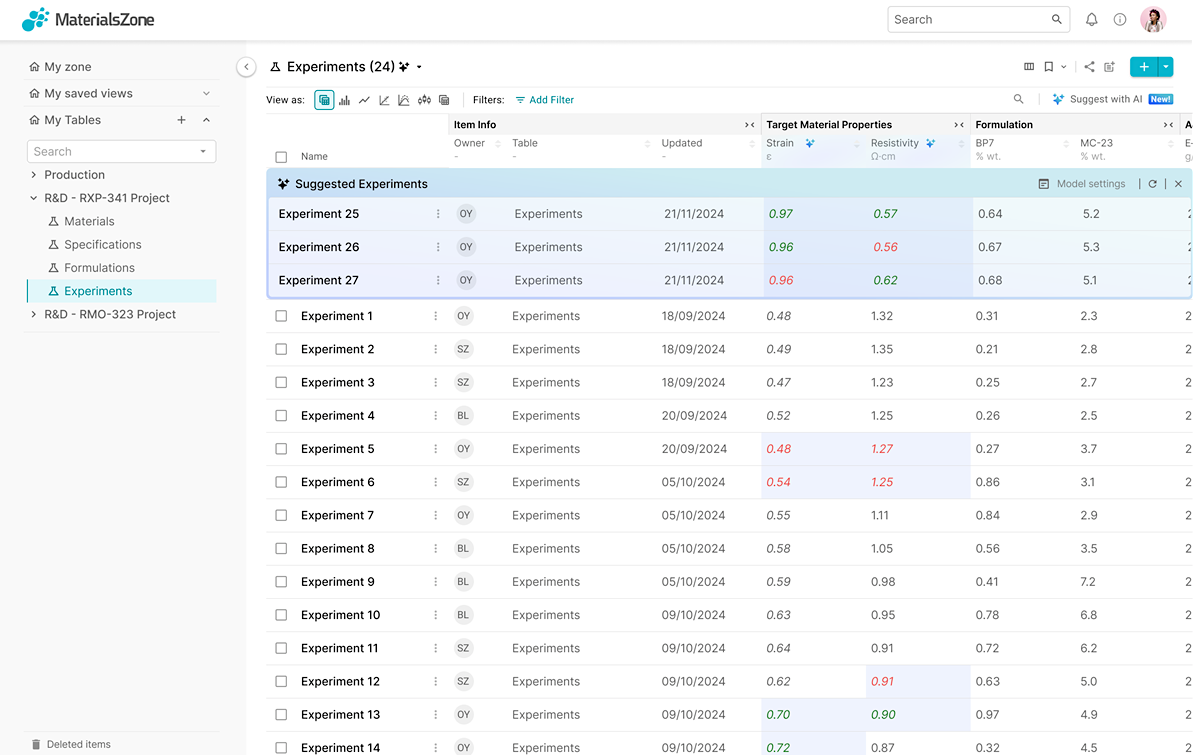
MaterialsZone is not a typical standalone product carbon footprint software solution, but instead is an advanced, AI-driven materials informatics and Lean R&D platform. It centralizes materials, formulation, process, and supplier data, then applies advanced analytics and machine learning to help teams develop better products faster. The platform is a critical enabler of high-quality product carbon footprint calculations because PCF analysis depends on accurate, standardized, and integrated materials and process data.
Rather than calculating footprints itself, MaterialsZone helps teams make PCF results more reliable and actionable by improving data quality and decision-making earlier in the product lifecycle, where most carbon impact is determined. It allows R&D, sustainability, and operations teams to move beyond reporting and use carbon insights to guide formulation, sourcing, and process choices.
Key Features:
- Centralizing materials, processes, suppliers, and experimental data required for carbon footprint models through the Materials Knowledge Center
- Standardizing and cleaning fragmented R&D and production data to improve the accuracy of downstream PCF and LCA tools
- Enabling comparison of formulations, processes, and inputs to identify lower-carbon alternatives using the Visual Analyzer
- Predicting environmental impact trade-offs during early formulation stages using the Predictive Co-Pilot
- Aligning sustainability, R&D, QA/QC, and production teams through the Collaboration Hub so carbon and performance targets are managed from the same source of truth.
Review: “The MaterialsZone platform significantly streamlined our research, providing early insights into batch quality through statistical analyses of process correlations.”
2. Best Product-Level PCF Calculator: Arbor
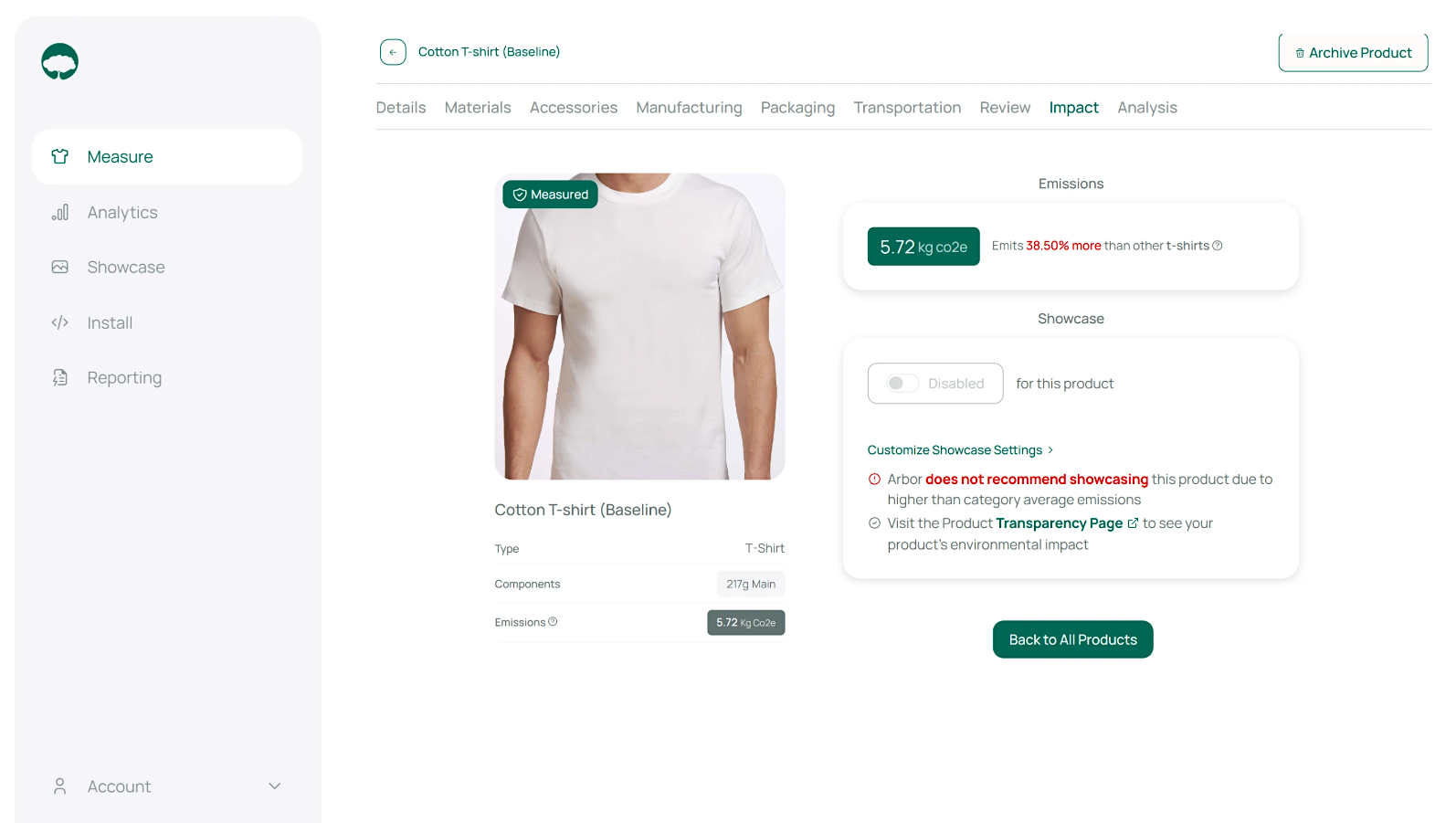
Arbor is a dedicated carbon accounting platform built for product-based companies that need fast, ISO 14067-aligned product carbon footprints across large SKU portfolios. It is particularly well-suited for organizations that treat product carbon footprints as a recurring reporting and disclosure requirement rather than a deep R&D optimization problem.
Key Features:
- Automated full-lifecycle PCFs using hybrid data, mixing supplier-specific inputs with curated secondary datasets to plug gaps.
- Hotspot analysis breaks emissions down by material, process, and supplier.
- Prototyping lets teams trial lower-carbon designs or suppliers before committing.
- Standards-aligned workflows and an “auditor view” keep every factor traceable for verification.
Review: “With a focus on accuracy and efficiency, Arbor's software streamlines impact assessment, making it easier and faster for businesses to understand and decrease their carbon footprint.”
3. Best Life Cycle Assessment (LCA) Platform: Manglai
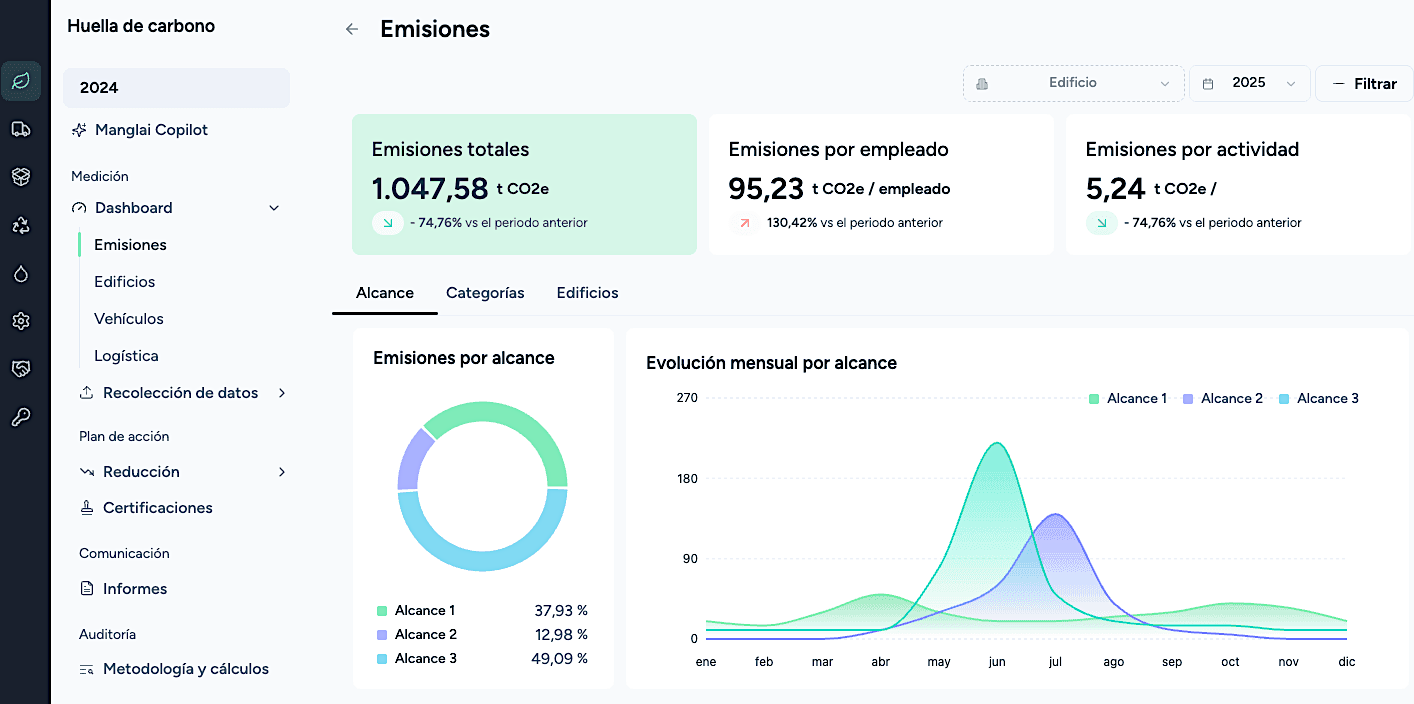
Manglai is an AI-powered carbon management platform that aims to give sustainability and product teams a full LCA-style view of product emissions. This platform fits teams that need to run complete lifecycle assessments internally, combining methodological rigor with enough automation to support repeated product-level analysis.
Key Features:
- Guided PCF/LCA workflows that walk users step by step from system boundaries and data import through to final, audit-ready reports.
- Verified LCA databases, including Ecoinvent, DEFRA, and IPCC factors, give transparent, cradle-to-grave emission factors for each lifecycle stage.
- AI-driven data automation with bulk uploads, integrations, and invoice classification that speed up data entry and highlight decarbonization hotspots in real-time.
Review: “What first drew me to appreciate them was that they wanted to understand exactly what I needed covered in terms of Scope 1, Scope 2, and Scope 3.”
4. Best Supply Chain Carbon Accounting Tool: CarbonBlock by CircularTree
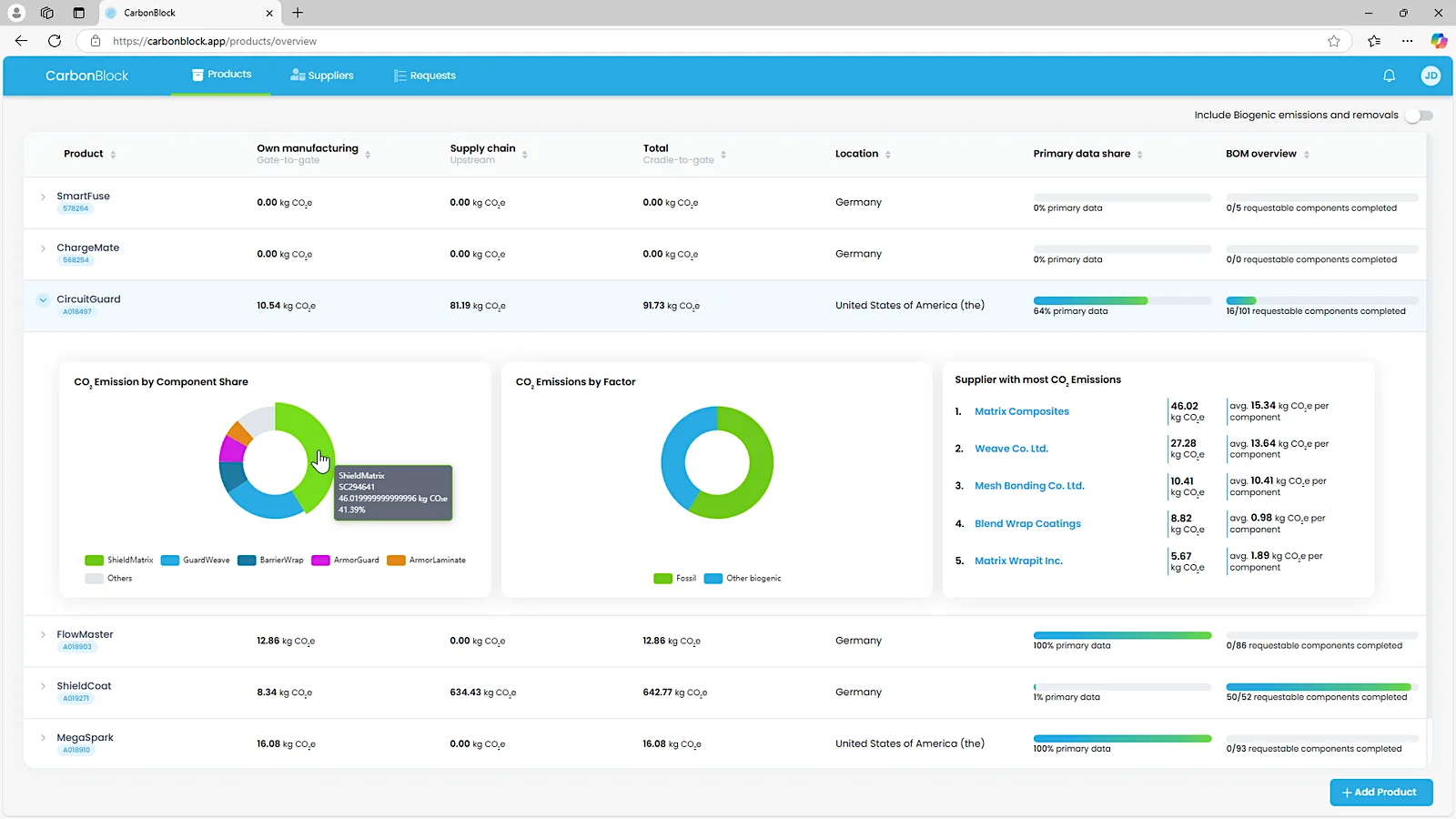
CircularTree’s CarbonBlock is a PACT-conformant supply chain PCF platform that calculates, manages, and exchanges product carbon footprint data across multi-tier supplier networks. It is designed for OEM-led ecosystems where product carbon footprint rules, formats, and participation are defined centrally and rolled out across the supply base as a shared operating standard.
Key Features:
- PACT-aligned PCF engine and exchange that calculates PCFs and lets you request upstream primary data from suppliers to increase data quality over time.
- Supplier data sharing via a supplier portal, with automatic updates when suppliers revise footprints and a tamper-proof activity history.
- AI-driven component matching and hotspot insights that link BOM items to emissions databases, deliver automated hotspot analysis at the component level, and highlight which suppliers or materials drive most of a product’s footprint.
Review: “For the first time, we can track the actual carbon footprint of a (Porsche) component, starting from the raw material production at BASF, through the manufacturing process at Motherson, and all the way to our assembly line.”
5. Best Corporate Carbon Management Platform: Plan A
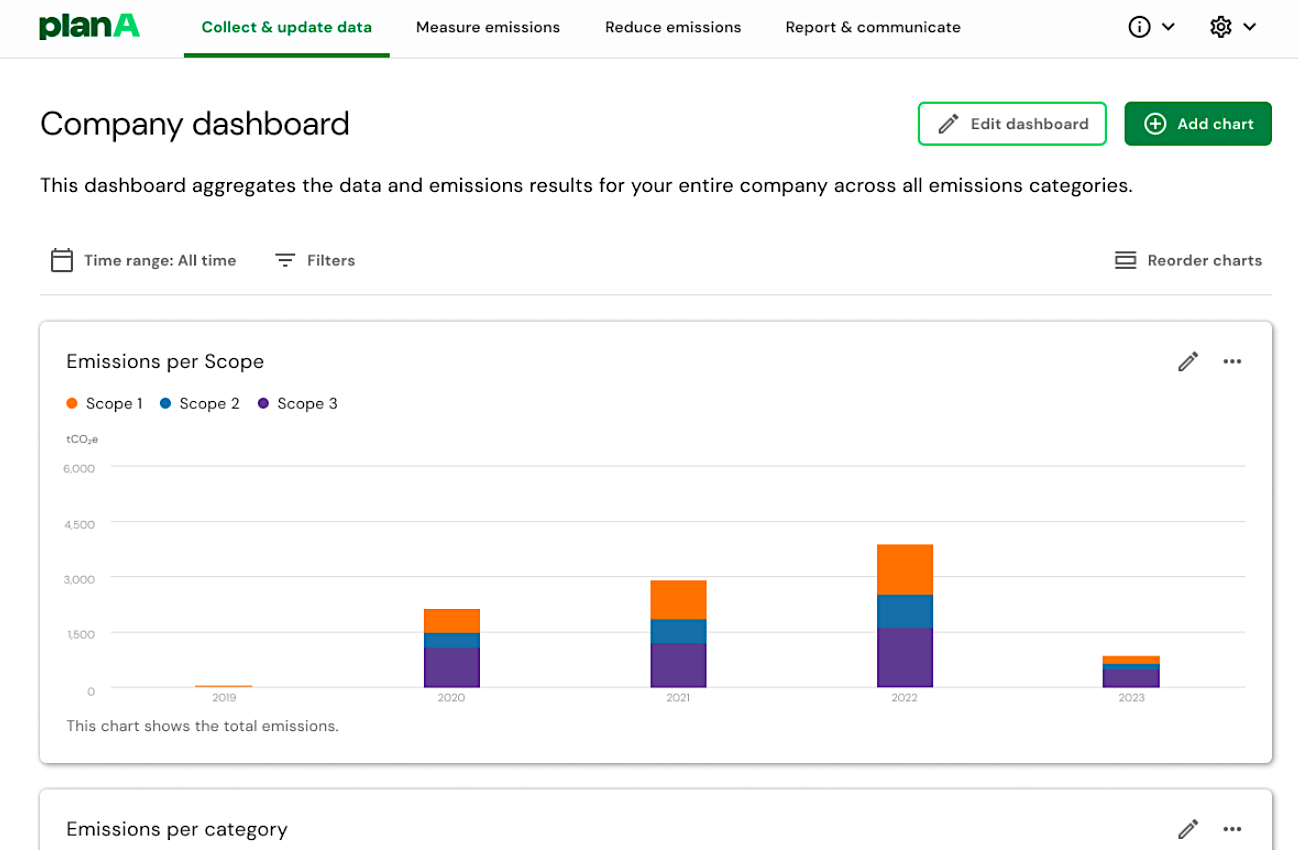
Plan A is a TÜV-certified corporate carbon and ESG platform that automates Scope 1-3 accounting and links it to decarbonization planning. It also supports product-level footprints so that manufacturers can connect SKU-level PCFs to corporate targets and CSRD/ESRS disclosures.
Key Features:
- Certified calculation engine that automates emissions across scopes using TÜV Rheinland–certified methods, ensuring audit-ready, science-based results.
- CSRD & ESG reporting suite with a dedicated CSRD Manager and content hub to structure ESRS disclosures and roll product and corporate data into one reporting backbone.
- Decarbonization roadmaps that let teams identify hotspots, simulate reduction scenarios, and track initiatives against net-zero targets in a single platform.
Review: “As we aim to implement a best practice sustainability management, we’ve been able to rely on the Plan A tool to easily and scalably measure our emissions, and are now working on setting SBTi targets and setting a pathway for operational reduction.”
6. Best Emission-Factor Database & Modeling Engine: Climatiq
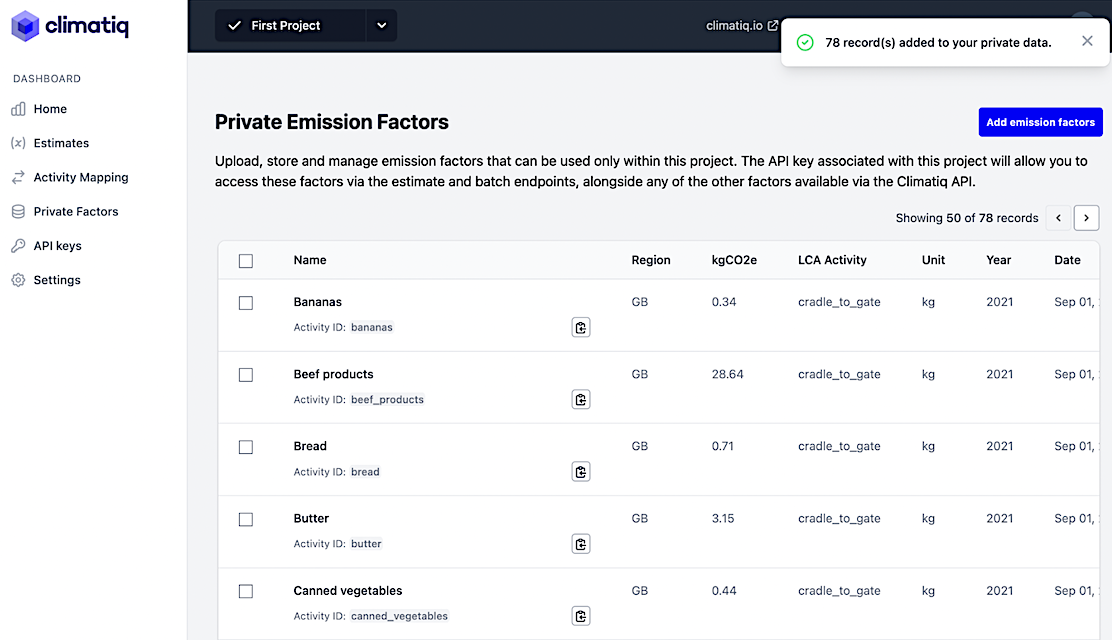
Climatiq is an API-first carbon intelligence platform that gives developers and sustainability teams programmatic access to a very large, scientifically validated emission-factor database. It’s typically used as the carbon math layer behind custom PCF calculators, supply-chain tools, and corporate carbon platforms.
Key Features:
- Extensive emission-factor library aggregating data from 80+ datasets and 40+ sources, enriched with metadata such as geography, year, method, and quality flags to support audit-ready PCFs.
- API-based calculation engine & Autopilot with endpoints for energy, freight, travel, purchased goods and services, and product-level PCFs
- AI that maps BOMs, invoices, or ERP lines to the right factors at scale.
- Public & private factor management allows teams to combine Climatiq’s curated datasets with licensed databases or supplier-specific emission factors, and filter Autopilot results between public, paid, and private sources.
Review: “We just send a request to Climatiq’s API and we can trust that the results we get back are accurate and reliable.”
7. Best EPD (Environmental Product Declaration) Generator: One Click LCA
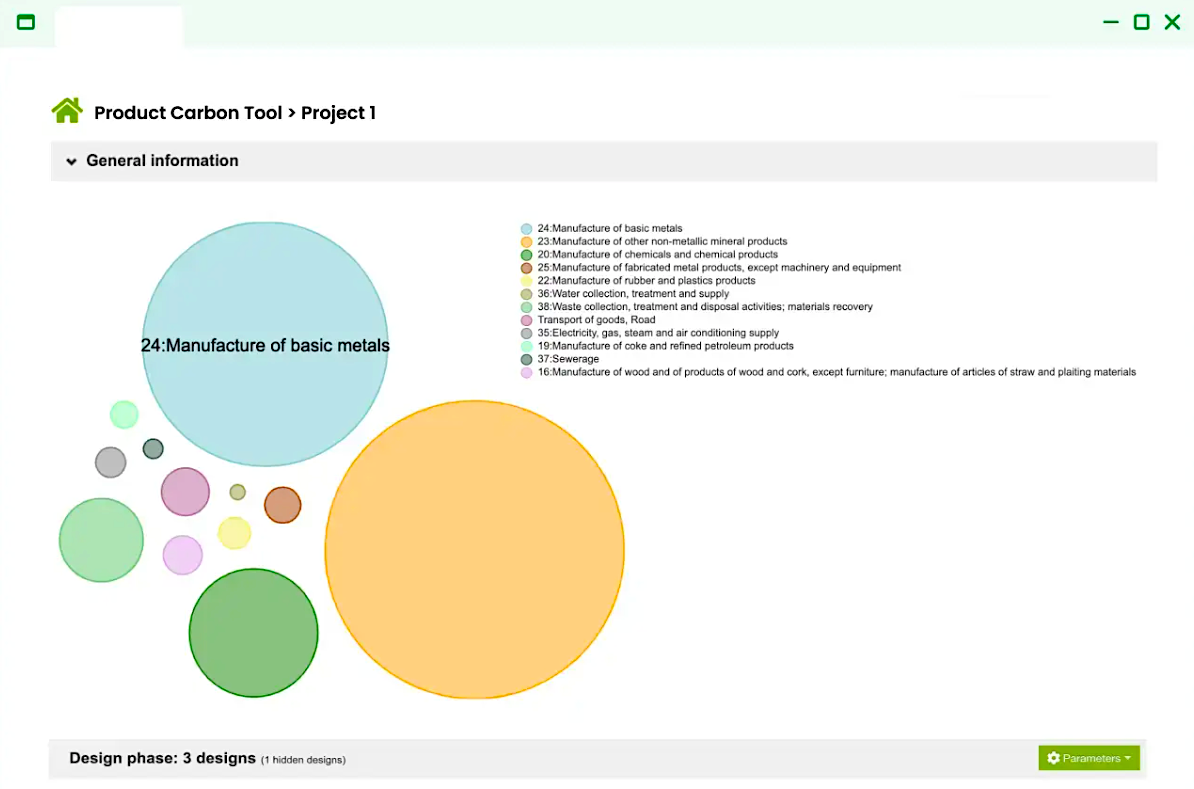
One Click LCA is a cloud LCA and EPD platform best known in construction and building products. It is used by manufacturers that need fast, standards-compliant product carbon footprints and EPDs.
Key Features:
- Automated product PCF and EPD workflows that guide manufacturers from data entry through lifecycle calculations to formatted reports, using templates tuned for common product types.
- Pre-verified and third-party-verified EPD generation that complies with EN 15804, ISO 14025, ISO 14067, and related standards.
- Integrations and AI-based automation that pull BOM data from BIM, Excel, or other tools, speed factor mapping, and cut the effort to generate compliant EPDs and product LCAs.
Review: “One Click LCA’s database helps us prepare accurate models and avoid greenwashing.”
8. Best Eco-Design & Materials Optimization PCF Tool: CarbonCloud
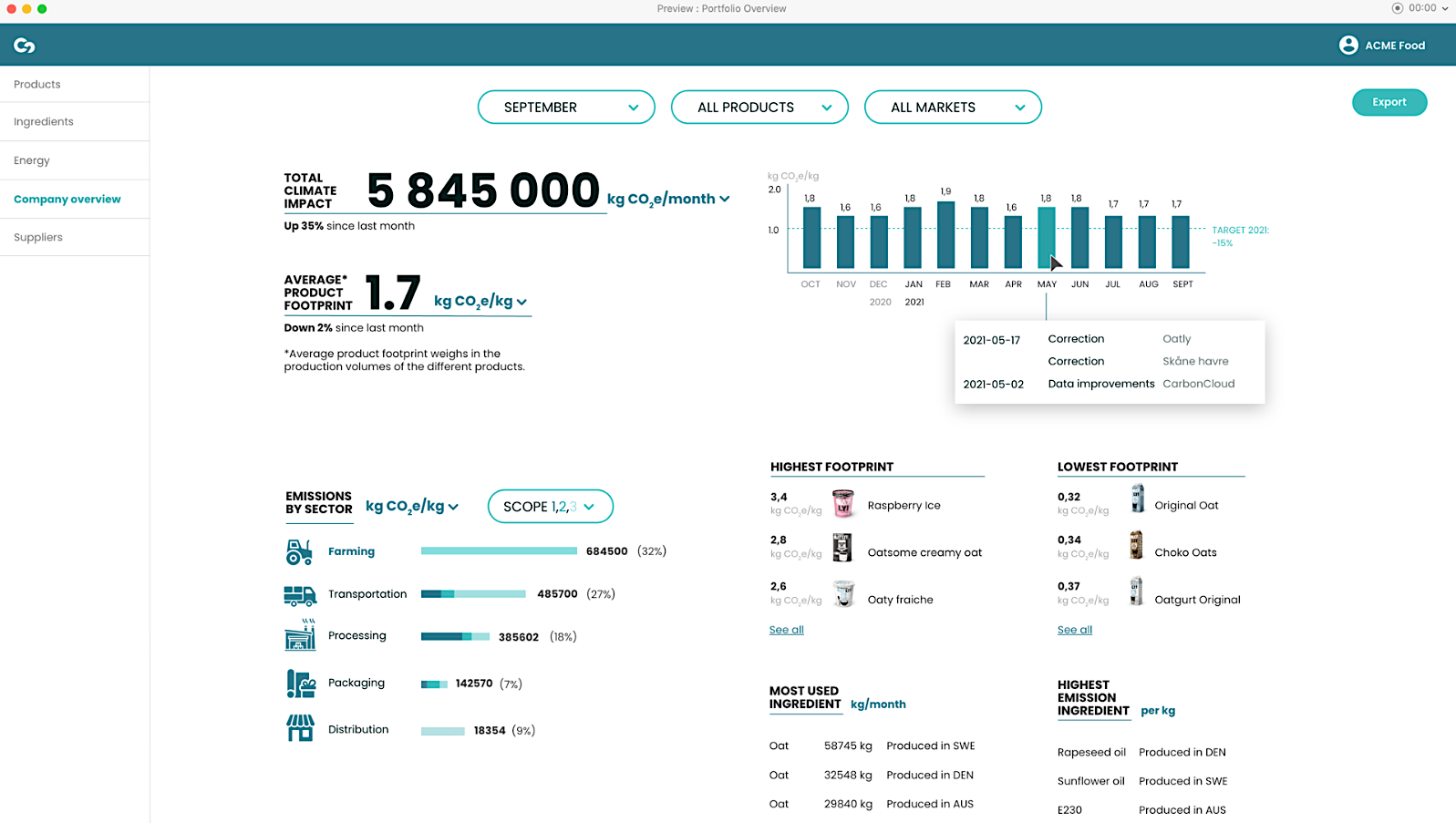
CarbonCloud is a climate intelligence and product carbon footprint platform built specifically for food & beverage and FMCG brands. It models emissions from farm to shelf using ingredient- and recipe-level data.
Key Features:
- Ingredient and recipe-based modeling that lets teams build digital recipes from bills of materials, origins, and processing steps, then calculates product PCFs and highlights supply-chain hotspots.
- Food-specific methodology and datasets grounded in models for agriculture, land-use change, and cold chains, aligned with ISO 14067 and the GHG Protocol Product Standard for consistent, audit-ready results.
- Portfolio scaling and climate labels that support thousands of SKUs, generate consumer-facing climate labels, and benchmark against CarbonCloud’s public ClimateHub of 10,000+ food products.
Review: “We decided to calculate the climate footprint of our products with CarbonCloud, to focus on the number that drives the food system change.”
Ensure Effective Carbon Footprint Reduction with MaterialsZone
Product carbon footprinting is becoming a design and operating constraint for your R&D, sourcing, and manufacturing teams. You need the right mix of PCF calculators, LCA platforms, supply chain tools, and data engines to get defensible numbers at scale, then use those numbers to guide real product and process changes. However, that only works if the underlying data is accurate and usable at scale.
MaterialsZone closes the gap between lab reality and PCF models by centralizing materials, formulations, process parameters, and supplier information in one structured system. Your teams work from the same dataset, which downstream PCF and LCA tools reference for product-level carbon calculations. Combined with AI-powered experiment recommendations that factor in cost and performance alongside carbon footprint considerations, MaterialsZone helps teams move from asking “What is this product’s footprint?” to “How do we systematically design for a lower one?”
Book a MaterialsZone demo today to start turning your R&D data into a practical lever for decarbonization.