


Top 12 Lab Automation Software Solutions
Lab automation software solutions are specialized platforms designed to automate and streamline various laboratory processes. Automation plays a vital role in managing laboratory workflows, data collection, and analysis, and is crucial for staying competitive.


Here are the top 12 lab automation software solutions commonly shortlisted by advanced materials, chemicals, and FMCG organizations:
- MaterialsZone
- LabWare LIMS
- LabVantage LES
- Signals Notebook
- Sapio Sciences
- Luma Lab Connect
- Momentum Workflow Scheduling Software
- LINQ Cloud
- Seeq
- Datacor Formulation Management
- 1LIMS
- Quartzy
The demands on advanced materials, chemicals, and FMCG labs are growing, as fierce competition pushes researchers to produce results faster and more efficiently. Labs are drowning in data that must be managed and analyzed accurately, while rising costs create new challenges to manufacturing efficiency and quality.
To overcome this rising pressure, lab automation software solutions are transforming operations by automating processes and workflows. The lab automation software sector is projected to grow by $2.02 billion over the next 5 years, highlighting the effectiveness of these solutions in achieving greater accuracy, faster decision-making, and improved efficiency. This guide details twelve top lab automation software solutions by type.
We evaluated the software based on buyer priorities like integration capabilities, automation flexibility, and data visibility to help you find the tool that best fits your lab’s use case. Tools like MaterialsZone, Luma Lab Connect, and Seeq help address different operational bottlenecks that slow down modern labs. Choosing the right one affects whether your lab can successfully move from manual processes and scattered data to more efficient automated workflows.
What Are Lab Automation Software Solutions?
Lab automation software solutions are specialized platforms that help laboratories automate everyday processes and reduce manual work. They give teams a more reliable way to manage lab activity, from routine tasks to more complex research and quality workflows.
For advanced materials, chemicals, and FMCG labs, this matters because experiments often generate data that must be easy to trace and reuse. Lab automation helps teams spend less time moving information by hand and more time applying results to the next decision.
In R&D and quality environments, lab automation software can improve speed without sacrificing consistency. It can also reduce avoidable errors and make lab results easier to manage across teams.

What Lab Automation Software Is Not
Lab automation software is not limited to robotics or fully automated equipment. Many platforms focus on the digital side of automation, helping work and data move through the lab more reliably.
It is also not required for every lab. A small team with simple workflows may not need a dedicated system right away. The need becomes clearer when manual processes start slowing the lab down or making results harder to trace.
12 Types of Lab Automation Software Solutions
Lab automation software comes in various types, each designed to address specific needs and workflows. Here are the most common types:
Top Picks at a Glance
- Recommended for Specialized or Specific Applications Software (Materials Informatics): MaterialsZone
- Recommended for Laboratory Information Management System (LIMS): LabWare LIMS
- Recommended for Laboratory Execution System (LES): LabVantage LES
- Recommended for Electronic Lab Notebook (ELN) Software: Signals Notebook
- Recommended for Scientific Data Management System (SDMS): Sapio Sciences
- Recommended for Instrument Control and Integration Software: Luma Lab Connect
- Recommended for Process Automation and Robotics Control Software: Momentum Workflow Scheduling Software
- Recommended for Workflow Management Software: LINQ Cloud
- Recommended for Data Analysis and Visualization Software: Seeq
- Recommended for Formulation Management Software: Datacor Formulation Management
- Recommended for Quality Management Software (QMS): 1LIMS
- Recommended for Inventory Management Software: Quartzy
Comparison Table: Best Lab Automation Software Compared
Selecting the right lab automation software depends on how automation needs to improve the way your lab works. For advanced materials, chemicals, and FMCG teams, the right choice comes down to integration capabilities, automation flexibility, data visibility, compliance and traceability, and ease of adoption. The table below compares twelve solutions across those dimensions to help you identify which best fits your use case.
How We Compared These Tools
We compared these lab automation software solutions using the same criteria so readers can quickly understand where each tool fits. The evaluation data is current as of 14 May 2026, and is based on publicly available information, including vendor websites, product documentation, feature pages, security and compliance materials where available, and reputable third-party review sources where relevant.
Because this is a category-based list, we selected tools that represent different types of lab automation software rather than ranking twelve identical products against one another. Each category reflects a common automation need in advanced materials, chemicals, or FMCG labs, such as managing lab data, connecting instruments, standardizing procedures, improving visibility, or supporting quality workflows.
What we reviewed:
- Fit for the category: Whether the tool clearly supports the type of lab automation it represents.
- Integration capabilities: How well the tool connects with instruments, software, data systems, or other operational platforms.
- Automation flexibility: Whether the tool supports a narrow workflow or can adapt to broader lab processes.
- Data visibility: How well the tool helps teams access, organize, analyze, or act on lab data.
- Compliance and traceability: Whether the tool supports reliable records, audit trails, SOP adherence, or quality documentation where relevant.
- Ease of adoption: How practical the tool appears to implement and use based on public information.
How we compared tools:
We focused on how well each solution supports its intended use case and whether it addresses the benefits labs typically expect from automation: less manual work, more consistent processes, better data access, and improved confidence in results.
We did not run hands-on tests for every tool. When a capability was not clearly documented or public information was limited, we avoided making strong claims and reflected that uncertainty in the comparison.
Top 12 Lab Automation Software Solutions by Type
These twelve lab automation solutions represent top-end software in their respective categories, so you can narrow the list based on the workflow your lab needs to automate first.
1. MaterialsZone – Recommended for Specialized or Specific Applications Software (Materials Informatics)
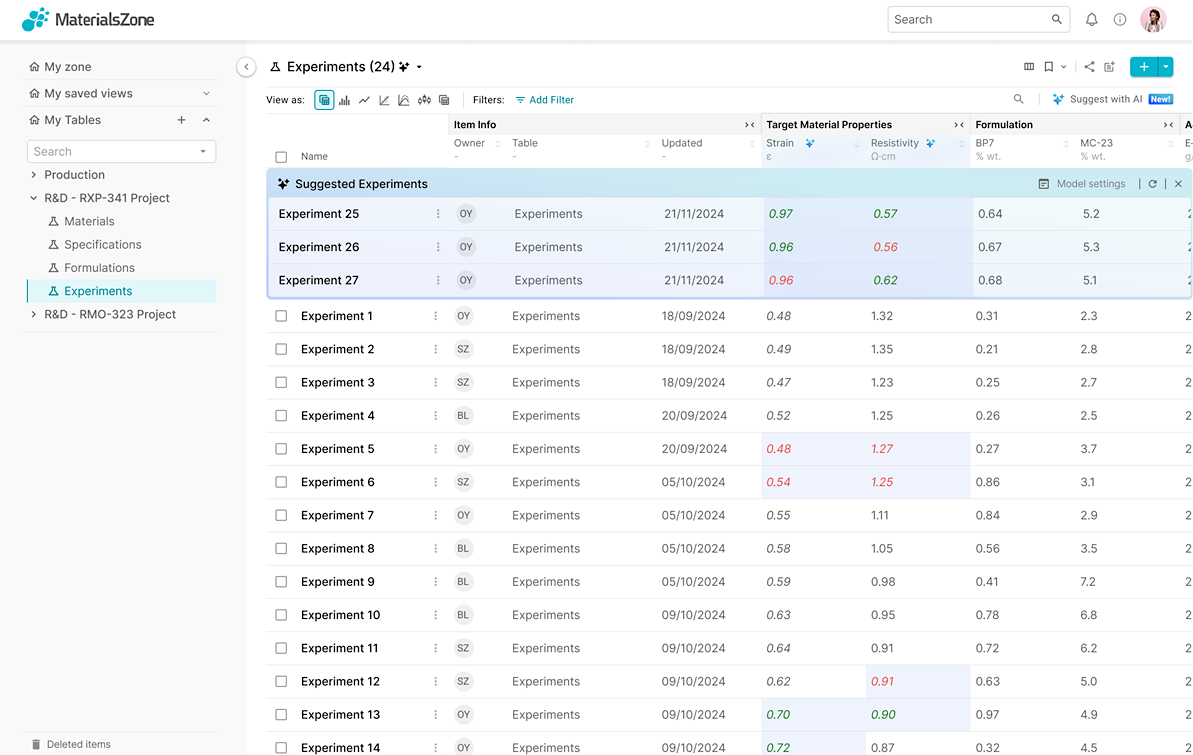
MaterialsZone is an AI-guided materials informatics platform offering advanced lab automation features tailored for materials research and R&D. It centralizes data from multiple sources, which provides labs with seamless integration and organization. The platform supports workflow automations that ensure consistency and efficiency in complex materials research tasks.
Key Features
- Robust in-platform tools for data analysis, predictive modeling, and experimental process optimization
- AI-driven analytics enable precise identification of patterns and insights
- Unified interface simplifies collaboration by allowing teams to access and share data effortlessly
- Structures, cleans, and harmonizes data from ERP, LIMS, ELN, PLM, and CRM systems
Review
“MaterialsZone has transformed our research process by organizing data and facilitating collaboration both internally and with external partners. The platform’s analytical tools helped us identify critical correlations between molecular structures and optical properties, significantly accelerating our molecule selection and optimization efforts.”
2. LabWare LIMS – Recommended for Laboratory Information Management System (LIMS)

One of the most recognized LIMS providers, LabWare offers comprehensive tools for sample management, workflow automation, and regulatory compliance. Its modular architecture makes it highly customizable and allows labs to scale the software as their needs evolve.
Key Features
- Sample lifecycle management for tracking samples from receipt through testing and reporting
- Configurable workflow automation for standardizing lab processes across routine testing and QC
- Instrument and enterprise system integration for connecting lab equipment with systems such as ERP or QMS platforms
Review
“The LabWare platform is highly flexible to accommodate nearly any lab process in any industry.”
3. LabVantage LES: Recommended for Laboratory Execution System (LES)
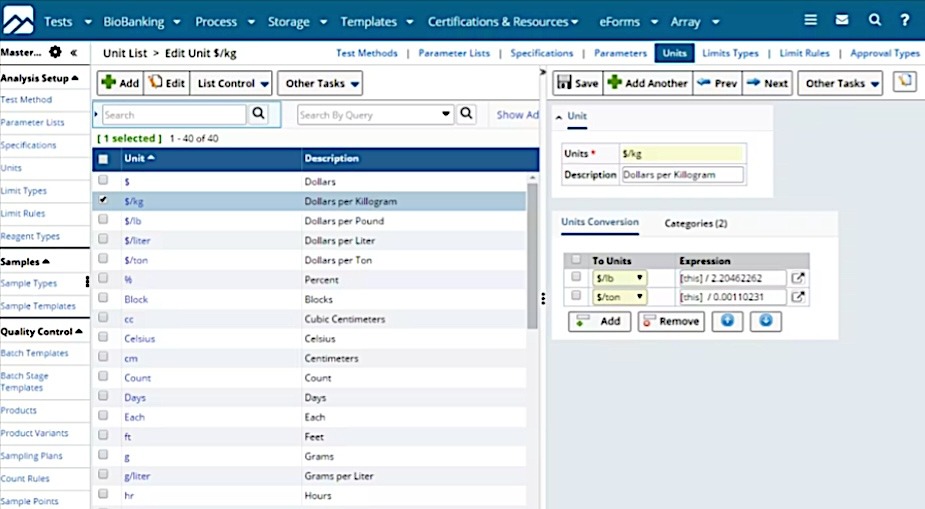
Embedded in the LabVantage LIMS, the LES is built for manufacturing labs that need tighter control over test execution. It turns approved procedures into guided electronic workflows, so technicians are prompted through each step, and required checks are captured as part of the record. This is automation at the execution level: the system controls how the test is performed, documents the work in real time, and routes completed worksheets for review inside the software.
Key Features
- Electronic procedure execution that guides technicians through approved methods step-by-step
- Automated compliance checks for required conditions such as calibration status, reagent validity, and sample requirements
- Digital worksheet routing for review, eSignature approval, and audit-ready records
Review
“Allows for great cross-functional communication and lab tracking.”
4. Signals Notebook – Recommended for Electronic Lab Notebook (ELN) Software

Signals Notebook is a cloud-native ELN for R&D teams that need structured experiment capture without adding heavy IT overhead. It supports chemicals and materials as well as food, flavor, and fragrance workflows, with native ChemDraw integration, Spotfire connectivity, and Signals DLX for automated instrument data capture. The ELN automatically brings experiment records, analytical data, inventory, collaboration, and compliance controls into one research environment.
Key Features
- Native ChemDraw integration for chemical structures, stoichiometry calculations, and chemical search.
- Signals DLX connection for automated analytical instrument data capture.
- Validation and compliance controls, including audit trails, eSignatures, role-based access, and 21 CFR Part 11 support.
Review
“The software allows drag and drop, sharing, and retrieval feature(s). The dashboard looks unpleasant (in the) first-time use.”
5. Sapio Scientific Data Cloud: Recommended for Scientific Data Management System (SDMS)
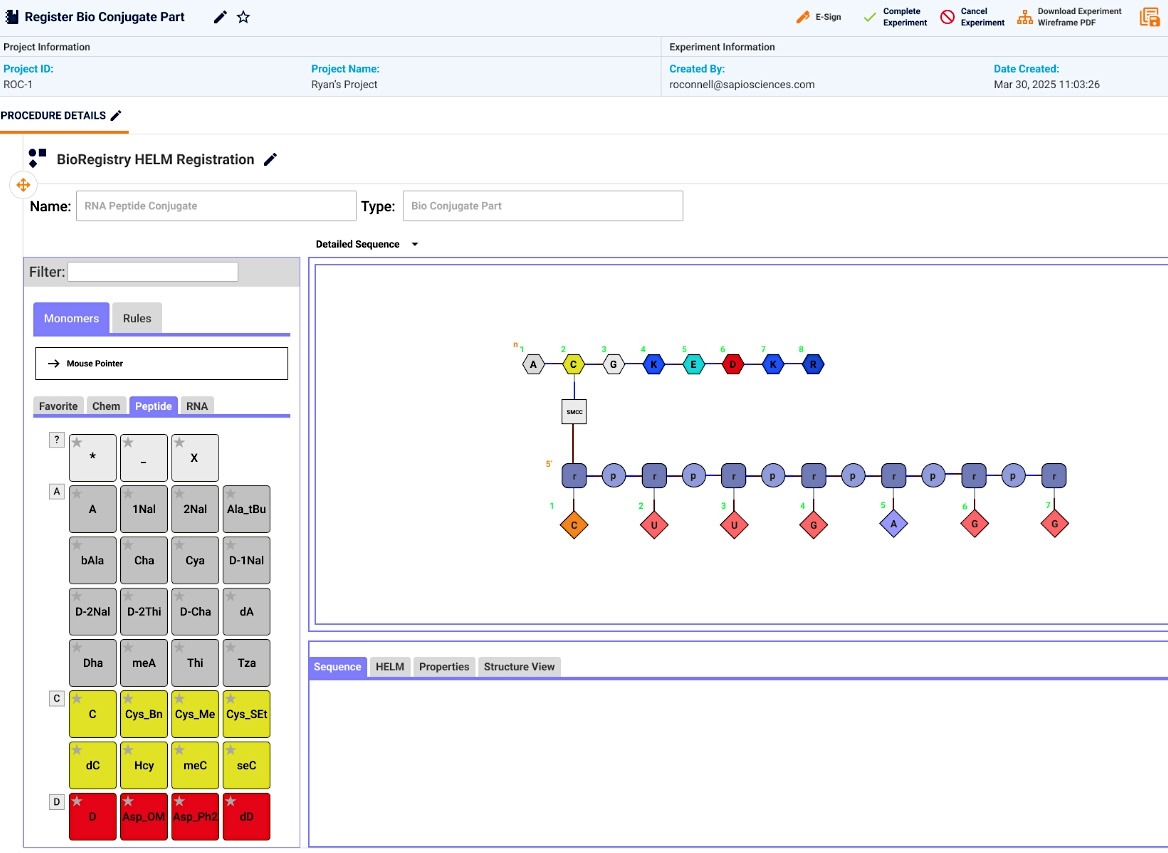
Sapio Scientific Data Cloud is a science-aware SDMS for managing scientific data across instruments, lab systems, and enterprise research workflows. The platform brings together instrument and system data, harmonizes it, and connects it with the relevant scientific context from projects, experiments, entities, and samples. It also includes built-in tools for organizing, searching, charting, analyzing, and preparing scientific data for agentic AI-driven work.
Key Features
- Automated data capture and parsing from 200+ supported instruments using file sweep
- Integration with LIMS and ELN records to connect instrument data with projects, experiments, entities, and samples
- Built-in scientific data organization, including search, charting, analytics, and AI tools for working with harmonized lab data
Review
“It greatly reduces time for lab operators to wrap up data manually into different data tables and graphs, to urge analytical results and enter into (the) batch record, or to generalize and calculate results to be presented or reported.”
6. Luma Lab Connect – Recommended for Instrument Control and Integration Software
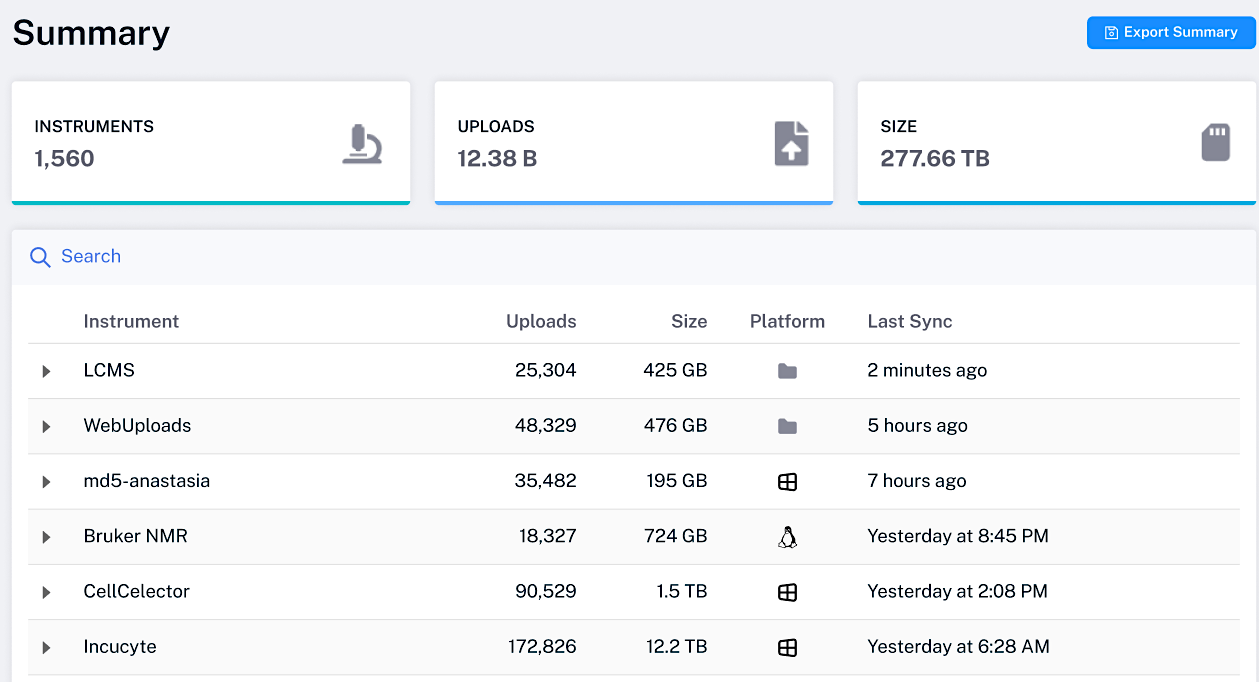
Dotmatics’ Luma Lab Connect integration software links scientific instruments with the digital systems used to manage R&D data. It automates the ingestion of raw instrument data, transforms manufacturer formats into structured scientific representations, and links test results with additional information from external systems. The platform also supports search, visualization, dashboards, and AI-ready data preparation, making instrument data easier to use across connected lab workflows.
Key Features
- Automated ingestion from 100+ instruments using out-of-the-box parsers that require no additional configuration
- Scientific data modeling that transforms inaccessible manufacturer data formats into usable structured representations
- Automated data enrichment that augments and correlates instrument test results with additional data from external systems
Review
“The platform’s ability to integrate chemical, biological, and experimental data in one environment adds significant value. Overall, these features streamline workflows, improve data accessibility, and support better, faster scientific decisions.”
7. Momentum Workflow Scheduling Software – Recommended for Process Automation and Robotics Control

ThermoFisher’s Momentum software helps labs design and run automated workflows that span instruments, robotics, and data systems. The software is built around a visual process interface, real-time control, and an expanding driver library for connected automation devices. It also supports more advanced automation setups, including multi-robot configurations and workflows that can be edited while the system is running.
Key Features
- Event-driven scheduling that runs multiple laboratory methods at the same time
- Drag-and-drop process creation with simulation and production modes
- RESTful API and Unite Module support for connecting Momentum with LIMS, ELN, and other external systems
Review
“Data-driven decision making that eliminates customized data handling. Best for easy use, and it may be implemented for any complex procedure.”
8. LINQ Cloud – Recommended for Workflow Management Software
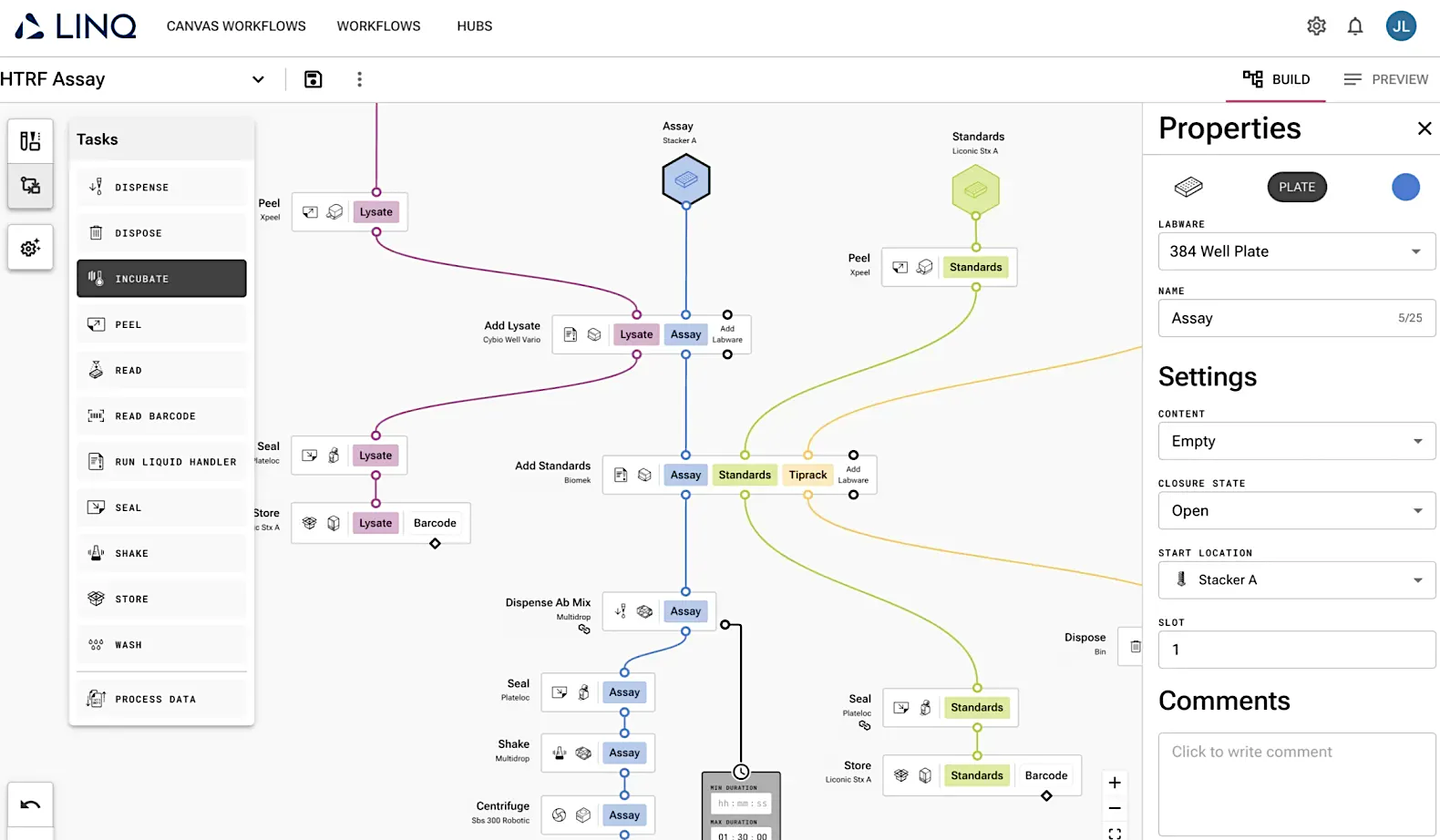
Automata’s LINQ Cloud offers labs a cloud-based workspace for building and managing automated workflows across connected lab workcells. The software uses a visual canvas that lets users design workflows, adjust runs in progress, and handle workflow logic without writing code. It also gives teams centralized visibility into workcell activity, run status, and workflow execution, making it a strong fit for managing lab automation at the workflow level.
Key Features
- No-code protocol builder for turning lab methods into executable automation workflows
- Cloud-based device monitoring for checking instrument and robot status across connected workcells
- Workflow version control for updating protocols while maintaining a clear record of changes
Review
“Automata worked with the CRO to review their specific protocols and build their manual procedures into an automated workflow. The new workflow aimed to improve efficiency and enable automation.”
9. Seeq – Recommended for Data Analysis and Visualization Software

Seeq is an industrial analytics platform for turning operational and time-series data into clearer process insights. The software combines advanced analytics with AI, so subject-matter experts can investigate performance, reliability, sustainability, and production issues without depending entirely on data science teams. It is especially relevant for labs and process-driven environments where data analysis needs to connect historical context with day-to-day operational decisions.
Key Features
- Time-series analytics built for investigating process behavior across industrial and operational data
- Seeq AI tools that combine operational data, documentation, and historical context for faster analysis
- Data connectivity for working with information from enterprise systems, historians, and cloud platforms
Review
“Seeq is very helpful when it comes to transforming data into actionable insights which ensures fast and accurate decision making. With the tool, we have greatly enhanced our processes and improved our business outcomes.”
10. Datacor Formulation Management – Recommended for Formulation Management Software
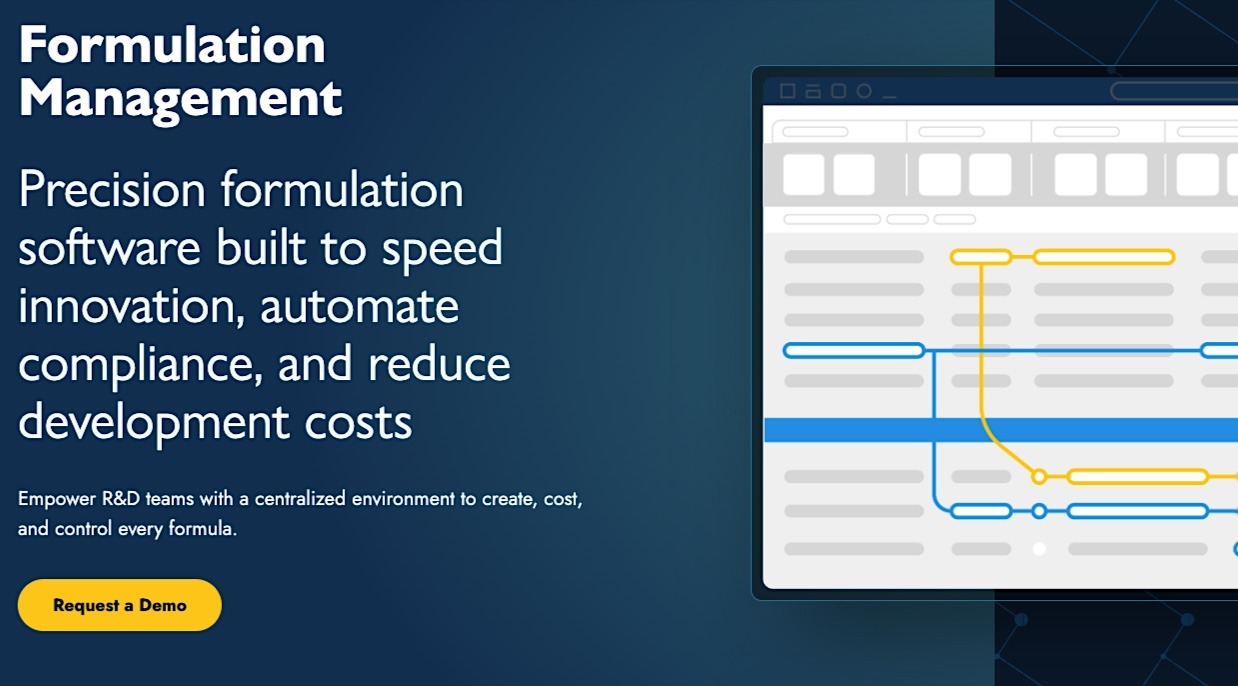
Datacor Formulation Management helps R&D teams create, cost, and control formulas in a centralized system built for batch manufacturing. The software automates parts of the formulation workflow, including SDS and GHS label generation, structured approvals, and ERP handoff after a formula is approved. It also keeps formula versions, material costs, and production readiness connected in one place, so that recipes can move from development to production with fewer manual steps.
Key Features
- R&D-only formula creation for developing formulas separately from production records
- Role-based access controls for managing who can view, edit, approve, or release formula data
- Formula transfer into Datacor ERP production BOMs, QC plans, and inventory without manual re-entry
Review
“We do so many different products. I sell things for KG per liter per unit, and I blend for KG, and I blend in different quantities depending on different customers; and just having each customer have their own portal is great. Those are the biggest things for us.”
11. 1LIMS – Recommended for Quality Management Software (QMS)
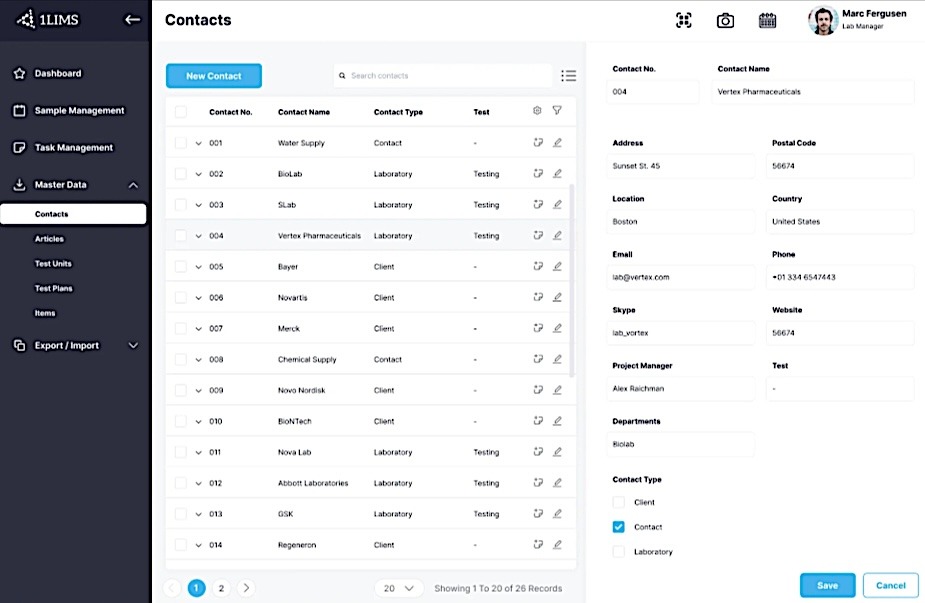
1LIMS is a cloud-based solution for quality control labs that need structured sample handling, digital workflows, and compliance-ready documentation. The platform helps teams move routine QC work out of spreadsheets by connecting sample registration, test execution, results review, and reporting in one system. Its quality management capabilities are supported by audit trails, electronic signatures, user permissions, and standards alignment for regulated lab environments.
Key Features
- Digital sample registration and tracking using QR codes and barcode labels
- Automated task assignment and workflow routing for quality control testing
- Audit trails and electronic signatures for compliance with FDA 21 CFR Part 11-style requirements
Review
“A smart and clever LIMS System, 1LIMS is a configurable, user-friendly, and flexible laboratory information management software which improved our work a lot. Information is centrally stored and found at the click of a button, rather than searching through paper files.”
12. Quartzy – Recommended for Inventory Management Software

Quartzy helps labs track inventory quantities, storage locations, and supply details in one customizable system. Teams can manage commercial supplies, chemicals, and lab-made materials while also keeping SDS forms and expiration alerts connected to inventory records. The platform also supports mobile barcode scanning and inventory imports, making it easier to maintain accurate stock data without rebuilding existing records from scratch.
Key Features
- Custom inventory fields for tracking quantities, storage locations, expiration alerts, SDS forms, and lab-made materials
- Mobile barcode scanning for finding items in Quartzy and updating stock levels from a mobile device
- Inventory import tool for uploading existing records from Excel, Google Sheets, or Claris FileMaker databases
Review
“The ease of having all of our inventory and ordering in one place is extremely useful in our fast-paced workspace.”
Leverage Lab Automation Software to Bring Better Products to Market Faster
Lab automation software is transforming laboratories by enabling faster, more efficient operations while maintaining accuracy and quality. It empowers researchers to focus on innovation and strategic problem-solving, resulting in streamlined processes, improved productivity, and the ability to meet increasing demands.
MaterialsZone helps R&D teams get more value from lab automation by turning fragmented experimental data into a connected foundation for discovery. Its AI-guided materials informatics platform centralizes research knowledge, strengthens collaboration across teams, and helps scientists identify patterns that would be difficult to uncover manually. With cleaner data, better visibility, and predictive insights, MaterialsZone supports faster, more confident development of materials-based products.
Try a MaterialsZone demo to experience lab automation via AI-guided materials R&D.

.png)
-min.jpeg)
