


ISO 11930 Testing: A Complete Guide
A cosmetic product can look, smell, and perform exactly as intended while still failing to control microbial contamination. Change an ingredient or introduce a new texture, and you may also change how well the finished product controls contamination.


Abstract
- ISO 11930 testing is a 28-day cosmetic challenge test that evaluates whether a finished formulation provides adequate antimicrobial protection.
- Explains why preservative efficacy testing matters and which water-based or water-miscible products may require it.
- Covers challenge organisms, microbial counts, log reductions, and Criterion A and Criterion B acceptance requirements.
- Outlines six program components and seven testing steps, from microbiological risk assessment to result capture.
- Shows how linking results with formulation, packaging, batch, QC, and process data supports better reformulation decisions and reusable R&D knowledge.
A cosmetic product can look, smell, and perform exactly as intended while still failing to control microbial contamination. Change an ingredient or introduce a new texture, and you may also change how well the finished product controls contamination.
As a result, preservative efficacy testing is a critical part of cosmetics development. The global cosmetics testing segment is estimated to generate $10.1 billion in revenue in 2025, underscoring the commercial importance of evidence on safety and performance. ISO 11930 provides R&D, QA/QC, microbiology, and regulatory teams with a structured approach to assessing antimicrobial protection before inadequate preservation results in failed batches or recalls.
What is ISO 11930 Testing, and Why Is It Important?
ISO 11930 testing is a cosmetic challenge test, also known as preservative efficacy testing (PET). ISO 11930:2019 provides a reference method for evaluating the preservation of a cosmetic formulation and interpreting the result as part of the product’s overall microbiological risk assessment.
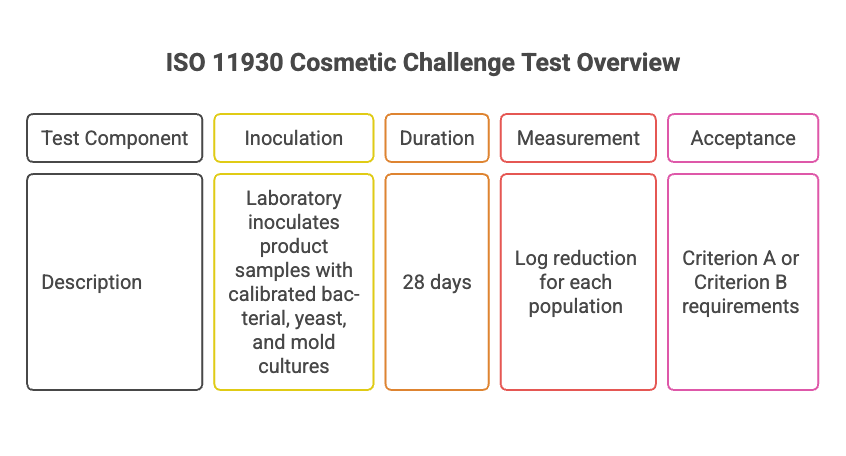
During the test, a laboratory inoculates separate product samples with calibrated bacterial, yeast, and mold cultures. It measures surviving microorganisms at defined intervals over 28 days, calculates the log reduction for each population, and compares the results with the standard’s Criterion A or Criterion B acceptance requirements.
Criterion A sets the stricter performance thresholds and demonstrates faster, stronger control of the test microorganisms. Criterion B permits slower microbial reduction but may still represent acceptable protection when supported by the product’s broader microbiological risk assessment, including factors such as packaging and manufacturing controls.

What Doesn’t ISO 11930 Evaluate?
ISO 11930 does not evaluate a preservative ingredient in isolation. Antimicrobial protection can also depend on pH, water activity, raw materials, manufacturing, packaging, and conditions of use. A formulation change can affect preservation efficacy, while a packaging change can alter the product’s exposure to contamination and its wider microbiological risk.
This factor matters during reformulation. For example, alternative preservative systems and natural ingredients introduce new formulation risks. Challenge testing shows whether the finished formulation can control microbial growth, not simply whether the selected preservative performs well on paper.
These considerations are particularly relevant when developing more sustainable cosmetics, where decisions about ingredients, packaging, performance, and safety must be evaluated together.
Who Is ISO 11930 Testing For?
ISO 11930 is most relevant to cosmetic and personal care organizations developing products that require antimicrobial protection. The method is primarily designed for water-soluble or water-miscible cosmetics, although it can be adapted for products in which water is an internal phase. Products assessed as microbiologically low risk under ISO 29621 may not require the same reference test.
Common product categories include:
- Creams, lotions, and serums
- Gels and facial cleansers
- Shampoos and conditioners
- Liquid or cream makeup
- Sunscreens
- Wet wipes and other water-based products
The work typically involves formulation scientists, microbiologists, product developers, QA/QC teams, regulatory specialists, production teams, and packaging engineers.
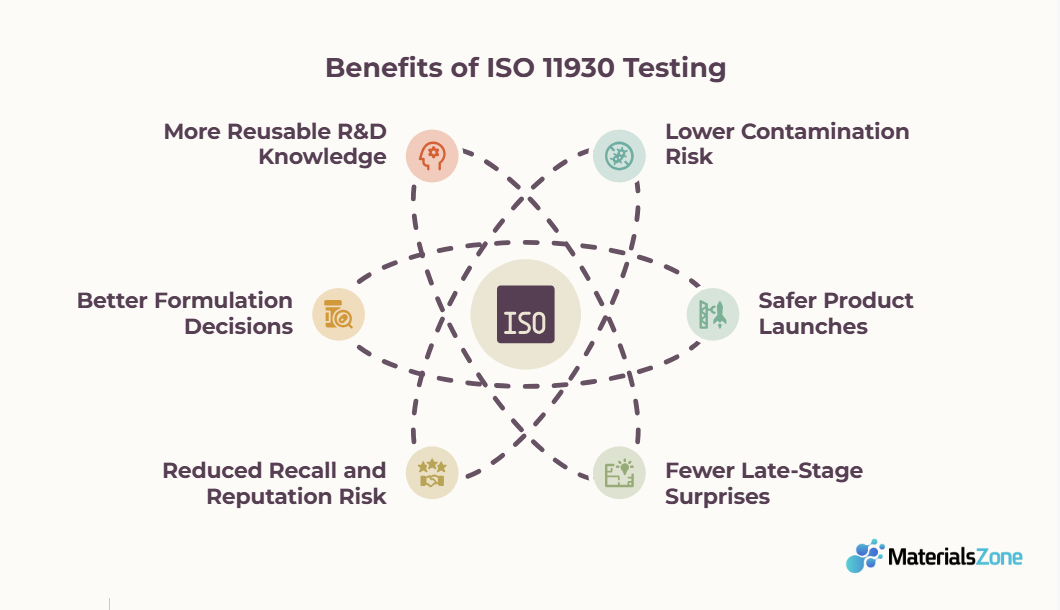
6 Benefits of ISO 11930 Testing
1. Lower Contamination Risk
Challenge testing evaluates whether a cosmetic formulation can control microbial growth under defined conditions, helping teams identify preservative weaknesses before products reach consumers. Because preservative performance depends on the entire formulation, including pH, water activity, ingredient interactions, packaging, and expected use conditions, ISO 11930 helps verify that preservation is effective in the finished product, not just in theory.
2. Safer Product Launches
Successful ISO 11930 results provide stronger evidence to support safety assessments, quality reviews, and go/no-go launch decisions. By confirming that a formulation can withstand microbial contamination under standardized test conditions, manufacturers can move into commercialization with greater confidence and fewer unanswered questions about preservative performance.
3. Fewer Late-Stage Surprises
Preservation problems found after scale-up or packaging approval can be expensive to resolve. Earlier testing helps detect weaknesses before commercial decisions become difficult to reverse. Incorporating the test at the appropriate stage of the product development lifecycle can reduce rework and support evidence-based development decisions.
4. Reduced Recall and Reputation Risk
Products with inadequate preservation can increase the risk of recalls, product safety issues, and compliance violations, particularly when microbial failures are identified after commercialization. Identifying preservation failures during development is significantly less costly than addressing contamination issues after products have entered the market, making challenge testing an important preventive quality measure.
5. Better Formulation Decisions
Standardized challenge test data make it easier to compare preservative systems, ingredient combinations, packaging formats, and formulation versions. Because preservative failures often result from interactions between ingredients, processing conditions, packaging, and preservative systems, comparing challenge test results across formulation versions helps teams identify which changes actually influenced antimicrobial stability.
6. More Reusable R&D Knowledge
When ISO 11930 results are linked to the complete development context, they become a reusable knowledge asset tied to the formulation, process, and product history, enabling teams to compare previous work, troubleshoot failures faster, and build formulation knowledge. This structured data foundation can also support AI personalization and predictive formulation workflows as organizations mature their digital R&D capabilities.
6 Components of an Effective ISO 11930 Testing Program
1. A Representative Product Sample
The sample should reflect the final or near-final formula, including the intended preservative system and relevant processing conditions. Even relatively small formulation or packaging changes can alter preservation efficacy, making representative samples essential for meaningful results.
2. A Defined Challenge Organism Panel
The laboratory needs the specified bacterial, yeast, and mold strains. Each microorganism is assessed separately to show whether protection works across microbial groups.
3. A Controlled Microbiology Test Setup
The workflow requires qualified lab procedures for preparing inocula, inoculating and incubating samples, neutralizing antimicrobial activity during recovery, counting viable microorganisms, and calculating reductions. The laboratory must also establish the neutralizer's efficacy and assess the sample’s initial microbiological quality.
4. ISO 11930 Acceptance Criteria
The laboratory calculates log reductions and compares them with the applicable Criterion A or Criterion B requirements. The outcome should then be interpreted alongside the product’s wider microbiological risk profile rather than treated as an isolated number.
5. Complete Result Capture and Reporting
The record should include sample identity, formula, and batch information; test organisms; time-point counts; reductions; deviations; interpretation; and outcome.
6. A Data and Workflow Management System
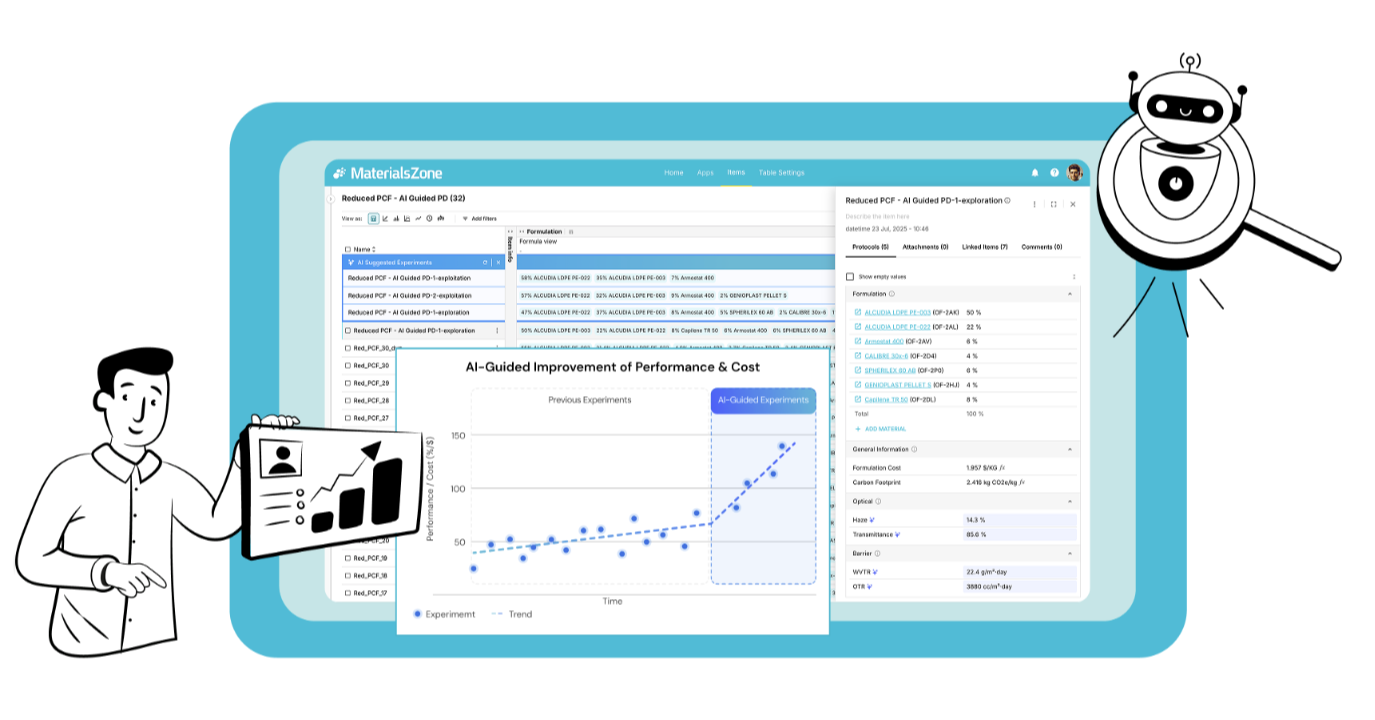
Preservative efficacy testing yields greater value when the report remains connected to the formula version, raw materials, batch, packaging, QC records, and development decisions. A materials informatics platform like MaterialsZone can bring this information together in a centralized knowledge environment, allowing teams to link each ISO 11930 result to the exact product and process data behind it.
Rather than treating the test outcome as an isolated laboratory result, R&D and QA/QC teams can compare results across formulation versions, preservative systems, suppliers, batches, and packaging formats.
The result is faster insight into patterns and the causes of failed tests, which you can take forward when developing or reformulating products. As more challenge test results accumulate, teams can identify recurring preservation issues, compare formulation strategies, and build the structured datasets needed to support AI-guided R&D and agentic AI workflows.

7 Steps for ISO 11930 Testing
Step 1: Assess the Product’s Microbiological Risk
Review the product type, composition, intended use, user population, manufacturing controls, and packaging. As an example, water-based formulas or multi-use formats may require close attention.
ISO 29621 guides the assessment of finished cosmetic products and the identification of those that present a low risk of microbial contamination during production or intended use. Products identified as microbiologically low risk may not require testing under standards such as ISO 11930, so this risk assessment should be completed before the test plan is finalized.
Step 2: Prepare Representative Samples
Use a final or near-final formula so the samples accurately reflect the product intended for the market. Record the formulation version, batch number, preservative system, pH, water activity, processing conditions, and proposed packaging.
Keeping this information connected to the test result is essential, as even a small change between iterations can affect preservative performance. A platform such as MaterialsZone can standardize and connect these records with the wider formulation and batch history, making it easier to trace exactly what was tested, compare outcomes across iterations, and investigate which variables influenced the result.
Step 3: Challenge the Product With Microorganisms
The laboratory introduces calibrated inocula of the defined strains into separate samples. This creates controlled contamination pressure against the formula’s protection system.
Step 4: Measure Microbial Counts at Defined Intervals
The laboratory recovers and counts surviving microorganisms at required time points across the 28-day test. Effective neutralization is essential so the preservative does not keep killing organisms during counting and create an artificially strong result.
Step 5: Compare Results With the Acceptance Criteria
For each organism and time point, the laboratory calculates the reduction from the initial count and compares it with the applicable ISO 11930 criteria. This converts the raw counts into evidence that can support a decision about the product’s antimicrobial protection.
Step 6: Decide What the Result Means
A satisfactory outcome can support progression toward scale-up, safety review, or launch. A weak or failed result may require changes to preservative concentration, pH, formulation, packaging, manufacturing controls, or raw materials. The outcome should also prompt teams to investigate which formulation, packaging, or process variables contributed to the result rather than focusing only on preservative concentration.
Step 7: Capture the Outcome for Future Work
Link the report to the exact:
- Formula
- Batch
- Ingredient lots
- Packaging
- QC data
- Decision history
Storing this information in a centralized materials informatics system turns the test result into reusable R&D knowledge rather than an isolated report. Teams can compare outcomes across projects, identify patterns behind successful or failed preservative systems, avoid repeating previous mistakes, and use validated findings to support future formulation and AI-guided R&D decisions.
Turn Preservative Efficacy Results Into R&D Knowledge
ISO 11930 testing helps cosmetic and personal care teams demonstrate that a product has suitable antimicrobial protection before it reaches consumers. It is particularly valuable when brands reformulate to achieve cleaner labels, new ingredients, reduced-preservative systems, or sustainable packaging.
But the value of ISO 11930 testing shouldn't end with a pass-or-fail result. Every challenge test captures formulation knowledge that can support future development, provided those results remain connected to the formulation, ingredient, packaging, and process data behind them.
MaterialsZone connects and standardizes formulation, ingredient, batch, packaging, QC, and test-result data, allowing teams to compare outcomes across product versions and investigate the variables behind successful or failed preservation systems. By turning prior test results into reusable knowledge, teams can reduce repetitive work, make better reformulation decisions, and enable faster, more confident AI-guided R&D.
Request a MaterialsZone demo to see how connected product data can support faster, more confident cosmetic formulation decisions.

.png)

.png)
