13 Food Formulation Software Solutions by Category
Food formulation software is a broad set of digital tools used to manage the scientific, regulatory, and operational decisions involved in product development. This article compares 13 solutions across materials informatics, formulation and nutrition labeling, product lifecycle management, and sensory validation. The right platform depends on the workflow a team needs to control, from regulatory calculations and specifications to experimental data and consumer testing. For data-rich R&D teams, materials informatics can also help centralize historical knowledge, support predictive analysis, and reduce unnecessary formulation iterations.
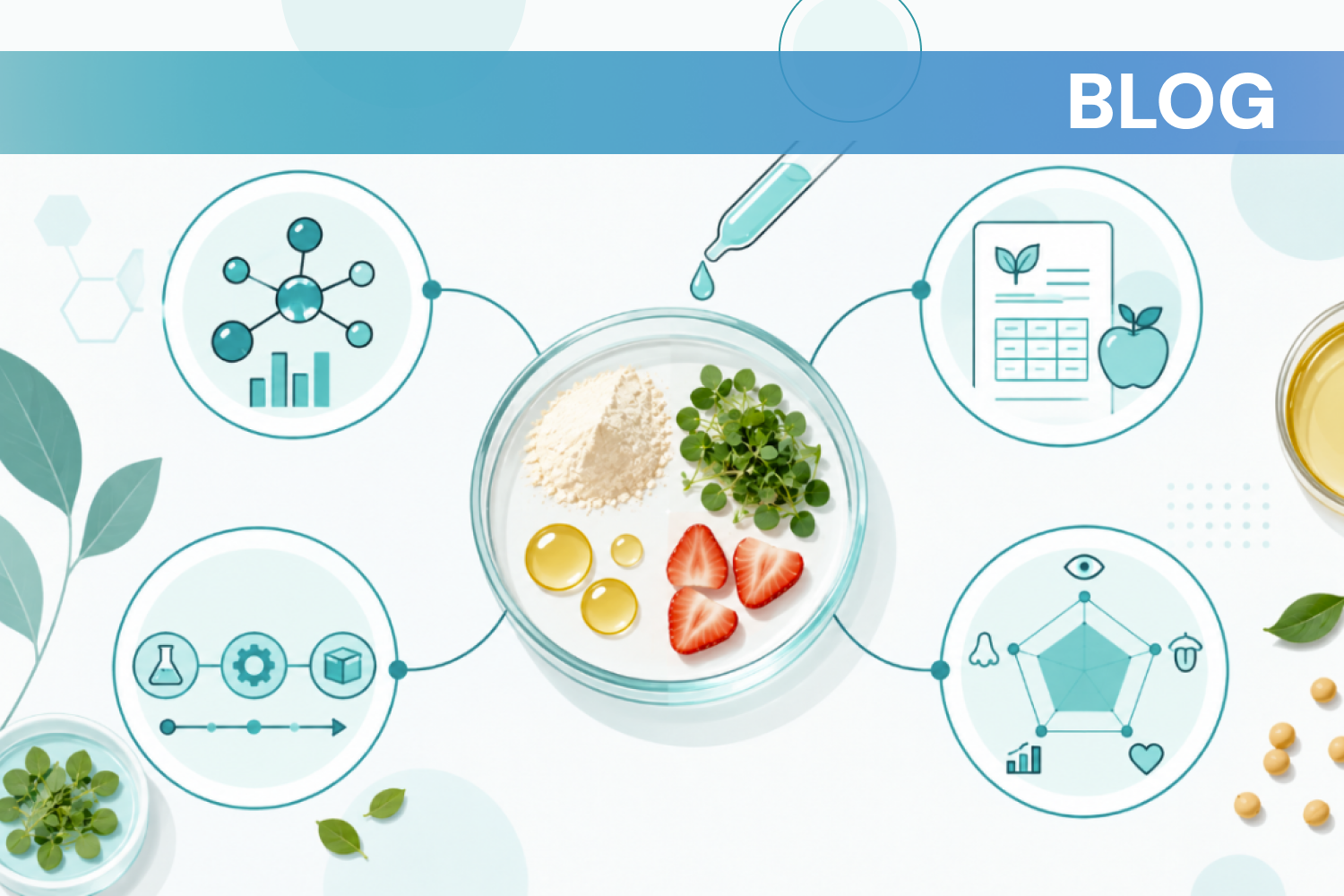

Food formulation is increasingly data-intensive. Texture, sweetness, acidity, aroma, stability, and shelf life are shaped by ingredients, processing conditions, and extensive testing. As a result, manufacturers rely on food formulation software and related platforms to manage formulation, nutrition analysis, regulatory compliance, experimental data, and sensory research.
As more R&D data accumulates, choosing the right system becomes more important. A 2025 UC Davis AIFS white paper identified fragmented data systems, interoperability challenges, and gaps in interdisciplinary food and data-science skills as barriers to broader AI adoption in food manufacturing. The best food formulation software therefore depends on the information your team needs to manage and the decisions it needs to make.
How Food Formulation Software Categories Differ
Food formulation software falls into four main categories, depending on company size and specific needs.
- AI-guided materials informatics software handles experimental data, formulations, and test results, and can compare experiments or predict how formulation changes might affect a product; it can also support formulation development and optimization.
- Formulation, nutrition, and labeling software does what its name suggests: it creates recipes, combines ingredients, and sets out nutrient data and labels. Product developers and nutrition teams will use it to calculate ingredient costs and nutrition values.
- Product lifecycle management (PLM) software manages the entire process of food development - from research to recipe creation, testing, and final labeling. Some PLM platforms can support formulation, but companies often use specialist tools for this.
- Sensory and consumer validation software manages sensory tests and consumer responses. This data is critical for scientists, insights teams, and R&D teams to understand how the product is faring and adjust texture or taste based on feedback.
These categories can overlap, so a company may use more than one. Smaller teams may need only labeling and nutrition software, while multi-site manufacturers require more project management support or specialist R&D or sensory tools.
Top Food Formulation Software Picks by Category
AI-guided materials informatics: MaterialsZone
MaterialsZone is an option for data-rich R&D teams that need to connect historical experimental data, analyze relationships across multiple variables, and use those findings to guide future experiments.
Top Pick for Formulation, Nutrition, and Labeling: Genesis Foods
Genesis Foods features a comprehensive ingredient database and supports multi-market labeling, making it ideal for teams that need recipe changes to produce accurate nutrition and label data.
Top pick for PLM and Specifications: Trace One Devex PLM
Trace One Devex PLM provides food manufacturers with a single source of truth from formulation through specifications, suppliers, labeling, and compliance, with changes propagated throughout the lifecycle.
Top pick for Sensory and Consumer Validation: Compusense
Compusense is a well-established sensory research platform. It provides comprehensive support for study design, panel management, validated testing methods, analysis, and reporting in one platform.
13 Food Formulation Software Solutions by Category
AI-Guided Materials Informatics For Food Formulation R&D
AI-guided materials informatics is for data-rich R&D teams that want to reuse testing results and formulations across experiments. Here, consider how well the platform brings information together and understands data context. For example, it should automatically analyze relationships between variables like ingredient ratios and processing conditions to help researchers make decisions.
1. MaterialsZone
Best for: Food R&D teams with substantial historical formulation and test data they want to put to use more efficiently.
Why it fits
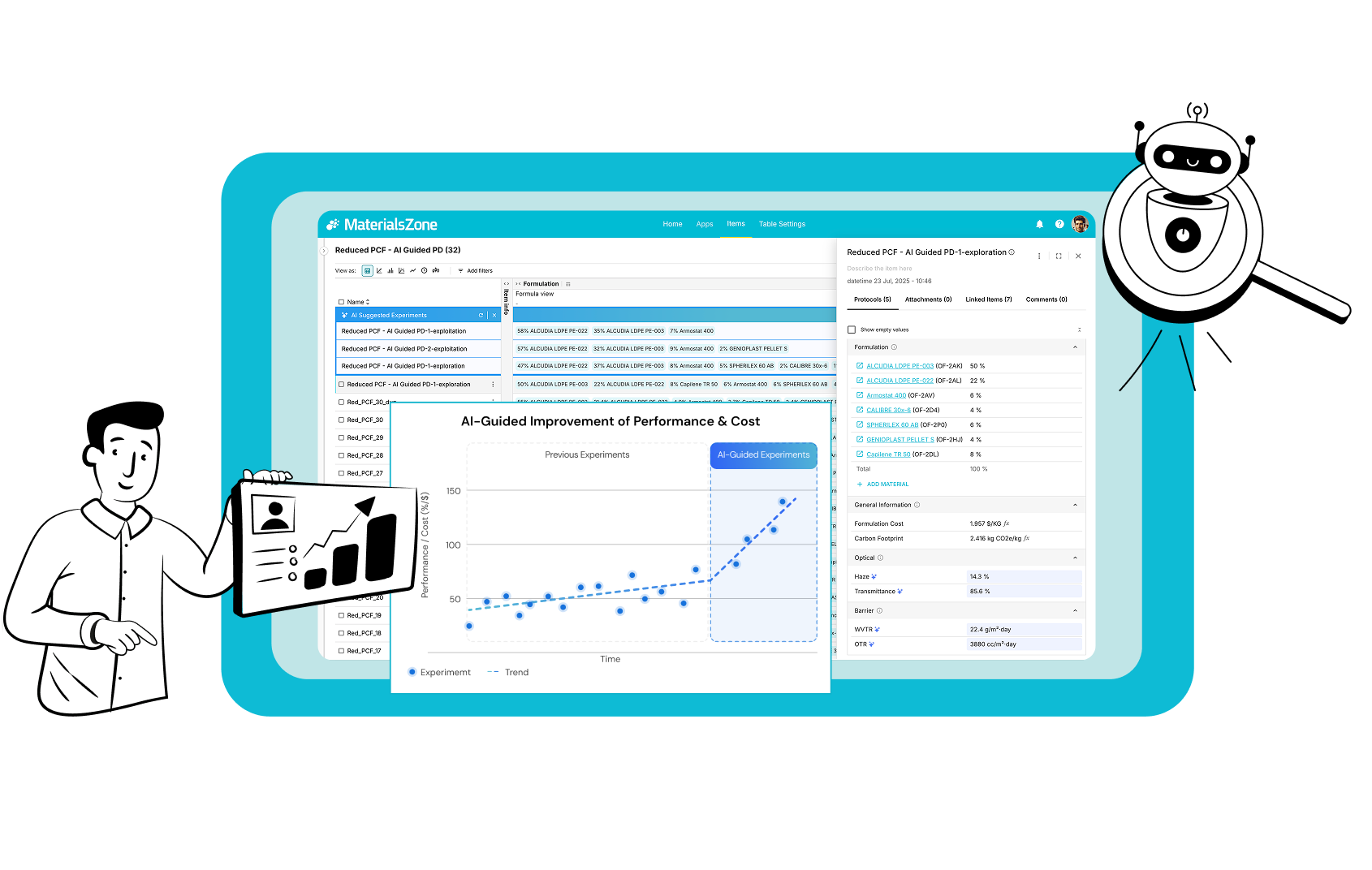
MaterialsZone helps R&D teams make better use of experimental work they have already completed. It integrates with and complements existing lab systems, bringing formulation and test data into a standardized, centralized knowledge base where researchers can analyze relationships across experiments. Its AI and machine learning capabilities help model outcomes and identify more promising experimental directions, supporting a Lean R&D approach that can reduce unnecessary iterations and enable faster, data-driven formulation decisions.
Key capabilities
- Materials Knowledge Center for data consolidation
- Visual Analyzer for multidimensional analysis across data
- Predictive Co-Pilot for AI-guided experimentation
- Collaboration Hub for sharing R&D knowledge across departments
- Integrates with and complements existing lab systems such as LIMS and ELN
Strengths and considerations: MaterialsZone is SOC 2 Type II compliant and includes enterprise security controls for sensitive R&D data.
Pricing and availability
Not publicly disclosed.
Evidence and review notes
MaterialsZone customers highlight easier access to R&D data, better collaboration, and more efficient analysis of previous experiments.
Formulation, Nutrition, and Labeling
These tools help teams ensure recipe changes flow into accurate nutrient, ingredient, allergen, cost, and label data. Regulatory coverage varies, so check where you sell products and whether you also need deeper R&D or lifecycle management.
2. Genesis Foods
Best for: Established food manufacturers and packaged-food teams that need a better, more automated workflow from formulation through to nutrition analysis and labeling.
Why it fits
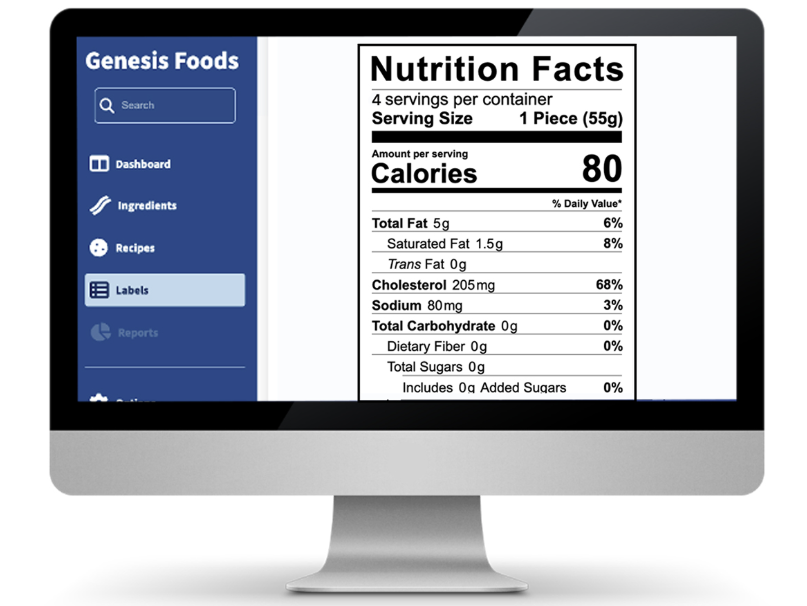
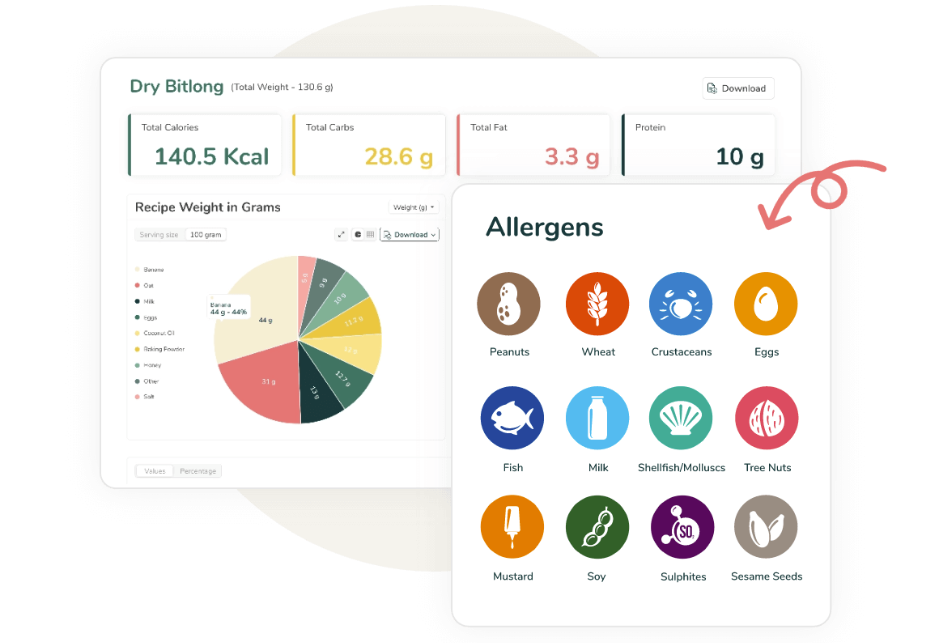
Genesis Foods by Trustwell keeps formulation and compliance synchronized. A recipe change can affect nutrient values, claims, allergens, ingredient statements, and the final label, so having those calculations and checks update together reduces rework between R&D and regulatory teams.
Key capabilities
- Recipe formulation and reformulation
- Automated nutrient calculations
- Nutrition Facts label generation
- Allergen and ingredient statements
- Formula version tracking and API connectivity
Strengths and considerations
Its main strength is deep regulatory and labeling functionality around formulation, including support for multiple markets and built-in regulatory guardrails.
Pricing and availability
Not publicly disclosed.
Evidence and review notes
Capterra rates Genesis R&D 4.5/5 from four reviews, but the sample is too small for a strong consensus. Ease of use scores lower at 3.5/5, so verify usability through a live demo
3. ENTR
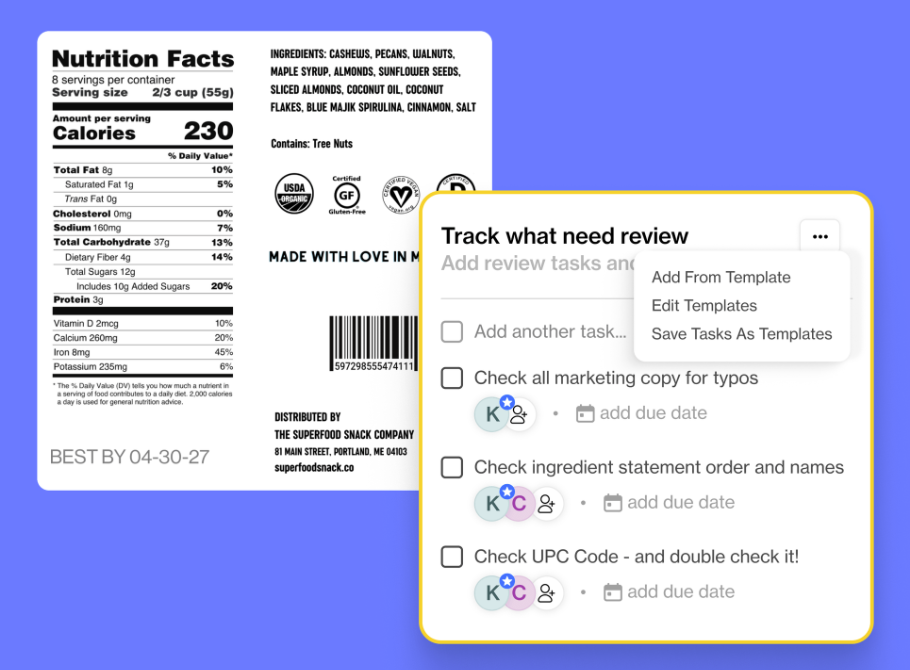
Best for: Food, beverage, and dietary supplement teams that want formulation and nutrition labeling built around regulatory compliance, particularly for US and Canadian markets.
Why it fits
ENTR is an all-rounder for food formulation, but its core strength is regulatory compliance. Guidance, nutrient-content claims, allergen declarations, and label requirements are all built into the formulation workflow, so R&D and regulatory teams can see the compliance impact of product changes as they work.
Key capabilities
- Product formulation with real-time nutrition analysis
- FDA, USDA-FSIS and Health Canada/CFIA compliance support
- Nutrition Facts and Supplement Facts panel generation
- Ingredient, allergen and nutrient-content claim checks
- Packaging artwork proofing with approvals and audit history
Strengths and considerations
Its strongest differentiator is the depth of compliance workflow around formulation and labeling. Do note that current documented regulatory coverage focuses on the US and Canada.
Pricing and availability
Not publicly disclosed.
Evidence and review notes
Independent review coverage is limited, with no substantial presence on G2 or Capterra.
4. Brix
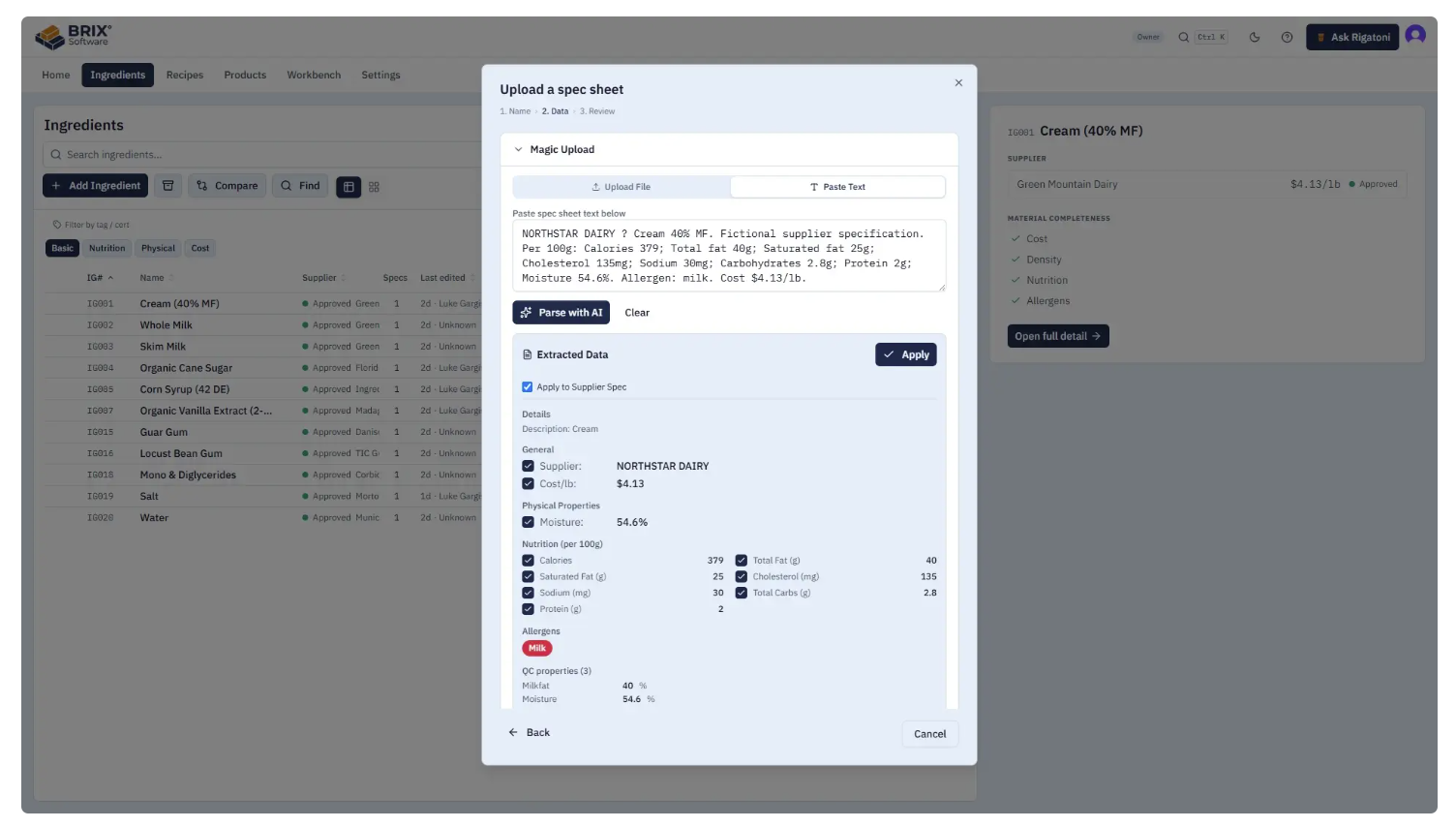
Best for: Small-to-medium food R&D teams that want a more structured formulation and experimentation system but don’t necessarily need a full-scale enterprise solution.
Why it fits
Brix helps improve daily R&D operations. It lets teams create formulations, run experiments, simulate costs, and approve recipes in one system. It is particularly useful for teams trying to formalize how they develop and compare products and improve cross-team collaboration.
Key capabilities
- Formulation and portfolio simulation
- Optimization and costing
- Projects, experiments, trials, and lab notes
- Drafts, approvals, version history, and audit trail
- API requests and AI-assisted workflows
Strengths and considerations
Brix’s key strength is the combination of formulation work and the ability to simulate commercial costing.
Pricing and availability
$299 per company each month, including three full users; additional full users cost $49 per month. The annual price is $2,990.
Evidence and review notes
Coverage based on independent reviews is still limited.
5. Formpak
Best for: Teams working with complex multi-level formulations and demanding regulatory documentation.
Why it fits
Formpak links complex ingredient structures with the regulatory calculations and controlled documents these products require, making it especially useful for flavor manufacturers and producers who need composition, safety information, allergen details, and customer documentation to remain traceable.
Key capabilities
- Multi-level formulations with tracking
- Regulatory rules and automated constraint checks during formulation
- Nutrition, allergen, and ingredient calculations
- SDS, specification sheets, labels, and customer-document generation
- Sensory profiling and application tagging for flavor workflows
Strengths and considerations
Formpak holds back document production until compliance conditions are met and applies regulatory rules directly to the formulations. Nevertheless, you should check which country-specific food regulations their use covers.
Pricing and availability
Not publicly disclosed.
Evidence and review notes
Because independent review coverage is limited, there isn't enough evidence to spot themes.
6. ReciPal
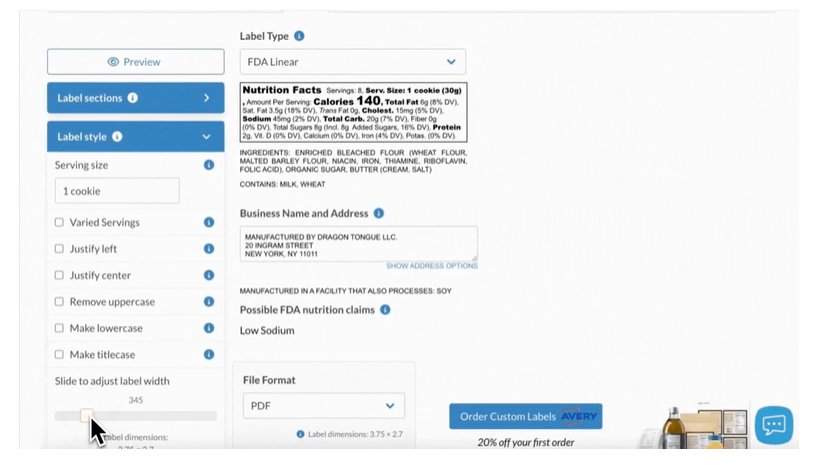
Best for: Startups and food businesses expanding and needing simple labeling and production tools.
Why it fits
With ReciPal, teams can create a recipe, generate the necessary label, understand the real cost, and then move on to inventory and production tracking as the business grows. The system now uses AI to eliminate some manual setup tasks that previously made nutrition software tedious.
Key capabilities
- AI Jumpstart to turn a pasted recipe into matched ingredients and quantities
- AI extraction of custom ingredient data
- FDA and CFIA Nutrition/Supplement Facts, ingredient lists, and allergen declarations
- Full-coverage recipe costing, from ingredients to labor costs
- Inventory, production records, lot-code traceability, API access, and barcodes
Strengths and considerations
The tool shows how recipe changes affect nutrition, allergens, and cost. International brands should carefully verify compliance with their specific regulations.
Pricing and availability
The Single Serving option costs $29 per recipe; Business costs $59 per month when billed monthly or $49 per month when billed annually. Business Plus costs $129 per month when billed monthly or $107 per month when billed annually.
Evidence and review notes
G2 reviews are positive, highlighting ease of use and a simple interface; however, the sample size is small (only nine reviews).
7. Food Label Maker
Best for: Food companies that need formulation and labeling across multiple regulatory markets and have a lot of data entry requirements.
Why it fits
Food Label Maker covers the regulatory requirements of different countries and reduces the work needed to keep product data compliant. The new RIA feature automatically converts recipes and supplier specification sheets into structured data, then verifies that the data meets each market's labeling requirements.
Key capabilities
- RIA Regulatory Intelligence Assistant, including AI Recipe to Label
- AI ingredient spec-sheet parsing for nutrients, ingredients, and allergens
- AI-assisted RACC and compliance checks
- Labeling support across 8+ markets
- Recipe costing, translations, API integration, and enterprise data migration
Strengths and considerations
RIA is a core part of the current proposition. It reduces manual recipe and ingredient setup and supports regulatory checking across markets. Enterprise teams also get role-based access, API connectivity, and migration support. The exact AI features vary by plan.
Pricing and availability
Enterprise pricing is custom.
Evidence and review notes
The review sample for Food Label Maker on Capterra is small, but the reviews generally point to good usability and support.
PLM and Specification-Led Food Product Development
PLM software manages the information and approvals needed to turn a formulation into a finished product. It connects the recipe to ingredient specifications, suppliers, packaging, regulatory requirements, and manufacturing instructions.
8. Trace One Devex PLM
Best for: Large food and beverage manufacturers who need to manage formulations throughout the entire product lifecycle.
Why it fits
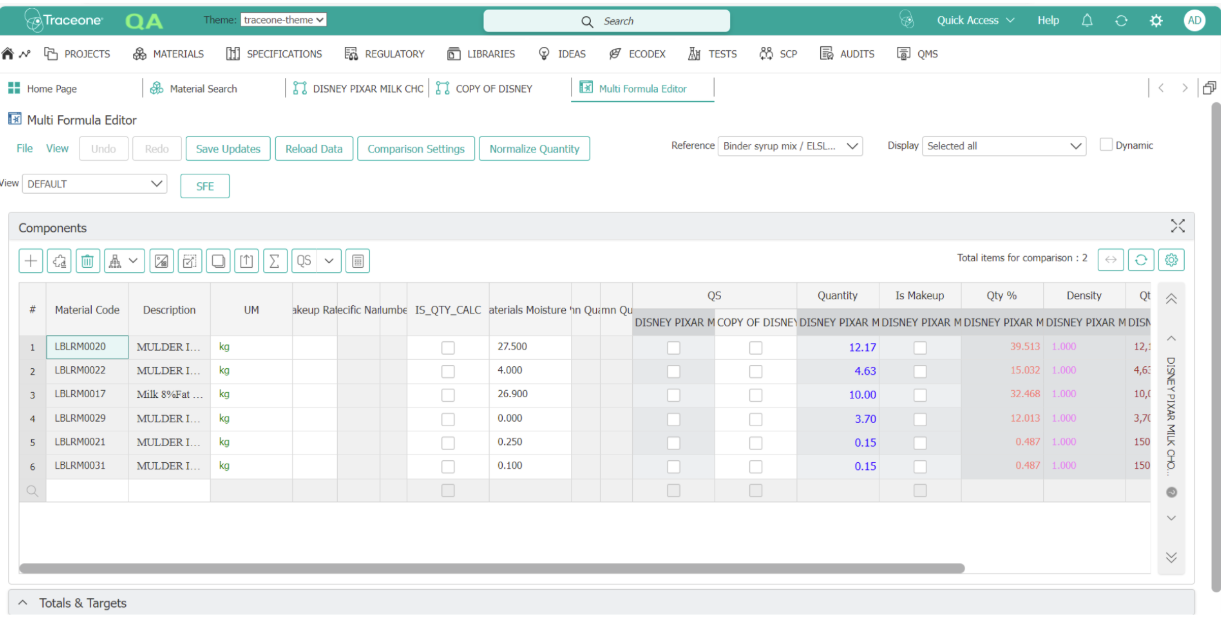
By linking the formula with the product, supplier, packaging, approval records, and compliance records, Trace One PLM lets teams evaluate downstream impact without pulling information from multiple systems. Trace One's latest AI feature, Trace One Copilot, also helps large companies overcome common regulatory and supplier data bottlenecks.
Key capabilities
- Predictive analysis for formula development
- Country-specific formulation compliance
- Trace One Copilot for regulatory research and formulation intelligence
- AI-assisted supplier-data extraction and onboarding
- Artwork proofing and ERP integration
Strengths and considerations
Trace One Copilot can use its already validated regulatory content, with enhanced AI features supporting ingredient discovery and supplier onboarding. The range of features makes it suitable for large organizations, but it requires more configuration and implementation.
Pricing and availability
Not publicly disclosed.
Evidence and review notes
The independent Devex PLM reviews are scarce. Yet Capterra reviews do underline the value of centralized product data and workflows.
9. Aptean PLM Lascom Edition
Best for: Food manufacturers that need to manage NPD projects across departments.
Why it fits
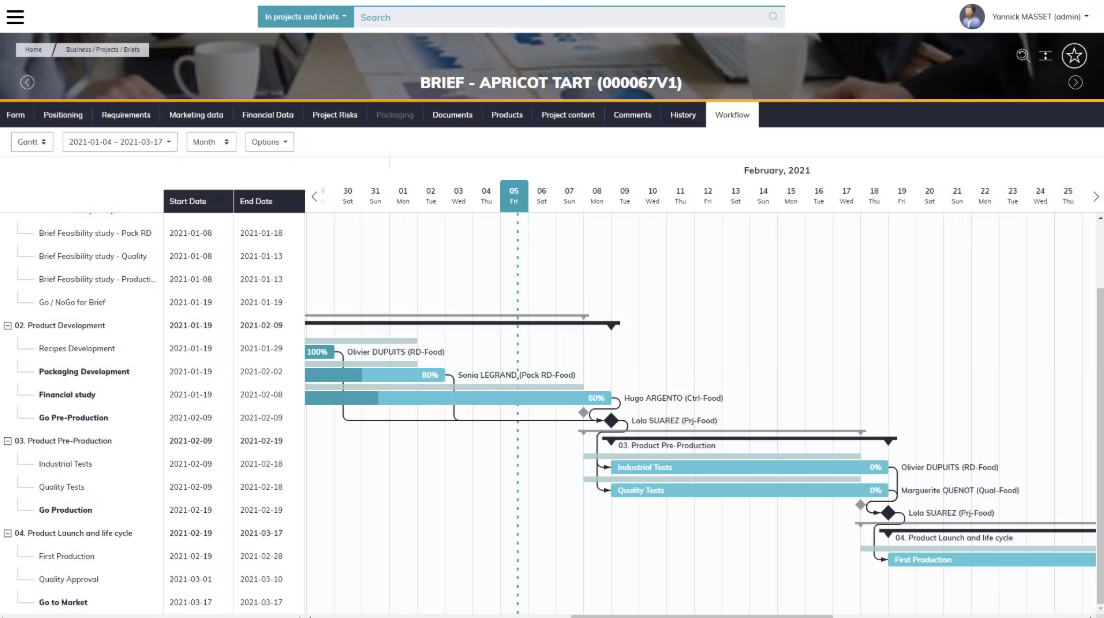
Aptean helps organizations coordinate the product-development process. It records the formula and the manufacturing process, while stage-gate workflows keep regulatory, R&D, quality, and project work moving through controlled approvals.
Key capabilities
- Formulation with nutrition, allergen, and cost calculations
- Manufacturing process specs and testing protocols
- Stage-gate NPD workflows and audit trails
- Built-in artwork development
- Supplier data and regulatory screening
Strengths and considerations
Because Aptean stores production parameters and testing protocols alongside formulas, it is useful when product development needs to hand off smoothly to manufacturing; the drawback, however, is the need for enterprise implementation and configuration.
Pricing and availability
Not publicly disclosed.
Evidence and review notes
G2 and Capterra don’t have many reviews specifically for Lascom’s food-and-beverage workflows.
10. Specright Food & Beverage PLM
Best for: Food and beverage teams that need formulation and specifications connected across the product lifecycle.
Why it fits
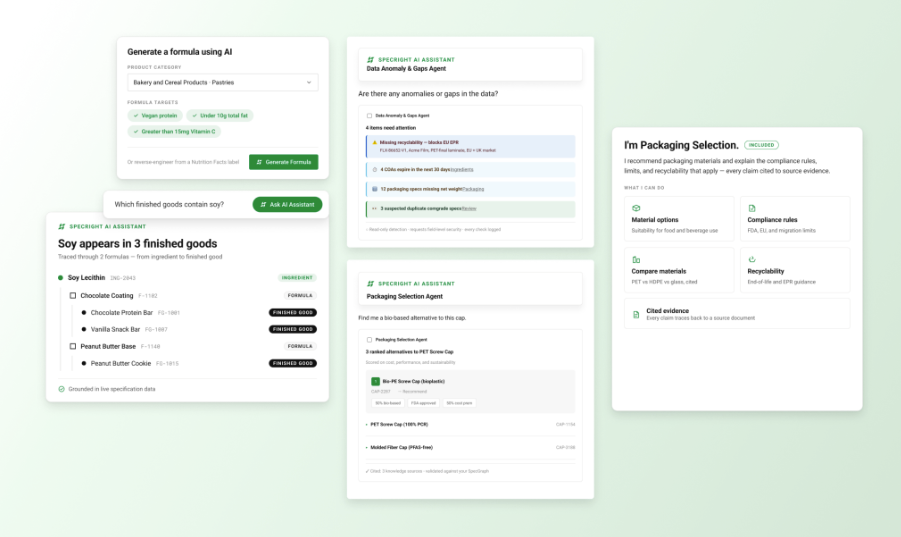
R&D teams can use Specright to develop or reverse-engineer formulas, calculate nutrition and allergen information, verify claims, and produce multi-region labels. After approval, they incorporate the formulas into manufacturing instructions, and the data remain linked to the final product.
Key capabilities
- AI R&D Workbench for formulation and reformulation
- Nutrition, allergen, claims, and multi-region labeling
- Connected formulas, ingredients, packaging, and BOMs
- SpecGraph change-impact and where-used tracking
- Supplier data, manufacturing instructions, and ERP sync
Strengths and considerations
What sets Specright apart is its ability to connect detailed product specifications with AI-assisted formulation and compliance workflows. Its Food & Beverage R&D Workbench became generally available in 2026, so buyers should confirm current plan availability, supported markets, and implementation requirements.
Pricing and availability
Not publicly disclosed.
Evidence and review notes
Specright has a G2 rating of 4.5 out of 5 based on 85 reviews; users commend its ease of use, centralized spec data, reporting features, and flexible workflows, though a few point out the complexity of implementation.
Sensory and Consumer Validation
This software helps food teams test products with trained panels or consumers. It manages the test itself, including which samples people receive and the questions they answer, then analyzes and compiles results. Offering various testing methods is critical here.
11. Compusense
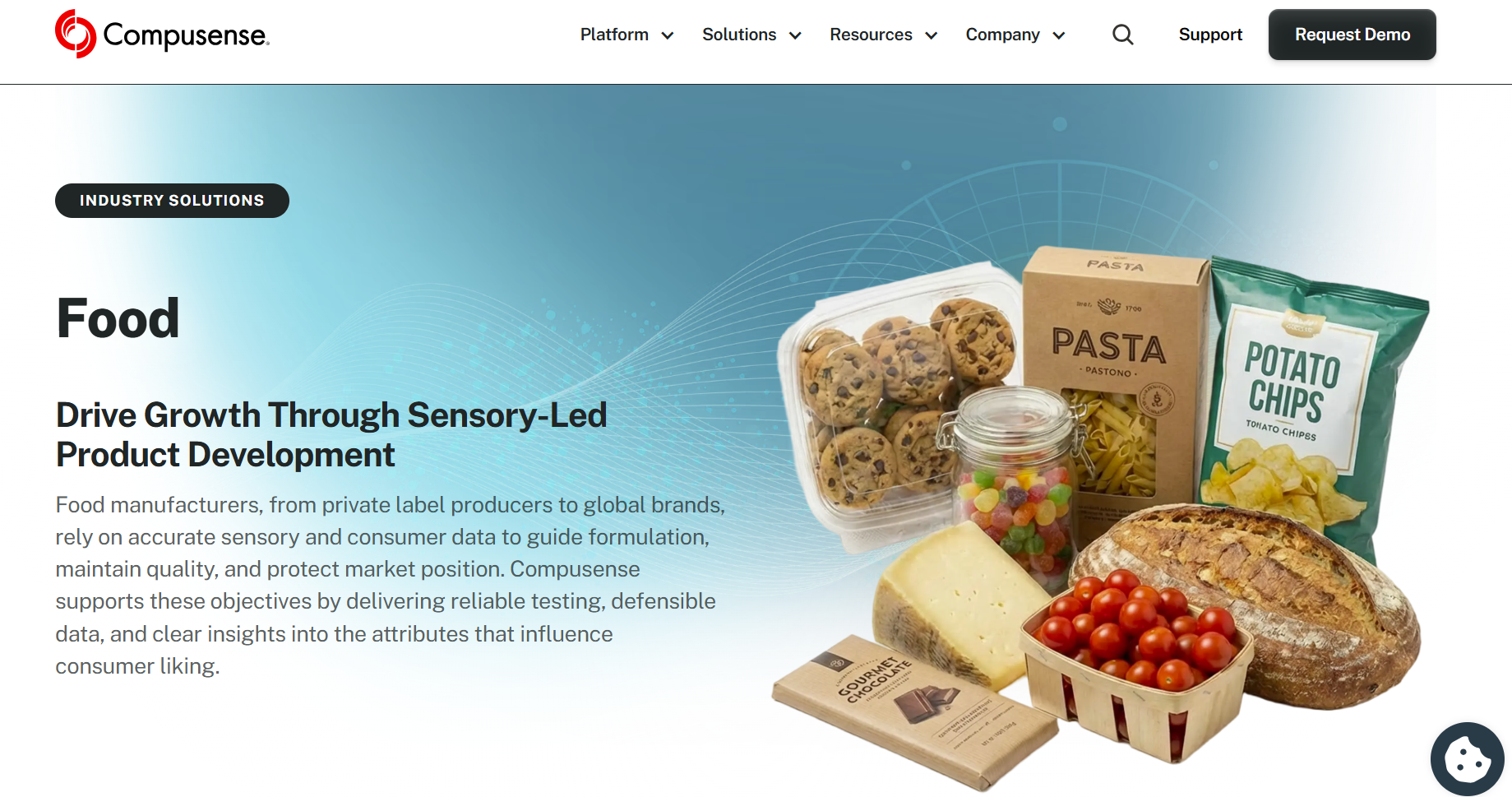
Best for: Food manufacturers that want a dedicated specialist tool for sensory and consumer testing.
Why it fits
Compusense is a food testing platform that helps food teams test how consumers perceive taste, texture, aroma, appearance, and overall liking. It supports product development from prototype and preference testing through shelf-life studies and ongoing quality checks.
Key capabilities
- Sensory panel training and management
- Shelf-life, prototype, and product optimization studies
- Built-in analysis of liking scores and sensory attributes
- Quality testing for taste, texture, color, and freshness
Strengths and considerations
Compusense integrates sensory testing, panel management, and analysis, with workflows well-suited to food R&D and quality teams.
Pricing and availability
Not publicly disclosed.
Evidence and review notes
Independent reviews are very limited, but users praise the app’s ease of use. Its website also states that the platform is “trusted by 300+” companies.
12. EyeQuestion
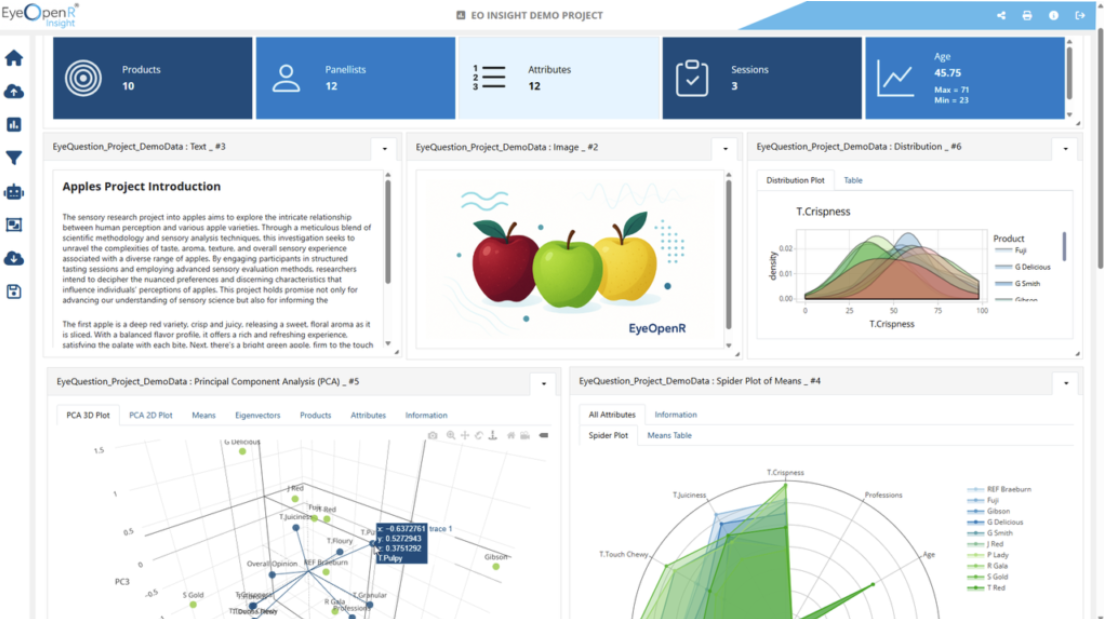
Best for: R&D teams running sensory and consumer studies across multiple locations.
Why it fits
EyeQuestion focuses on consumer research, offering various testing types, from Descriptive analysis and Difference tests to more advanced methods like Napping® and TDS. The cloud-based platform can translate questionnaires into different languages and offers advanced analysis so it can build reports instantly after submissions.
Key capabilities
- Discrimination, QDA, Napping, TDS, and consumer testing
- EyeOpenR with 50+ sensory and consumer analyses
- Multilingual, multi-site, and home-use studies
- AI remark labeling and live data reporting
Strengths and considerations
What sets EyeQuestion apart is its combination of a wide range of sensory methods with advanced R-based analysis and flexible panel management. Enterprise features such as API access and SSO are available only with the Corporate plan.
Pricing and availability
Not publicly disclosed.
Evidence and review notes
EyeQuestion reports more than 1.5 million evaluations annually and is used by hundreds of organizations globally, but independent reviews are very limited.
13. RedJade
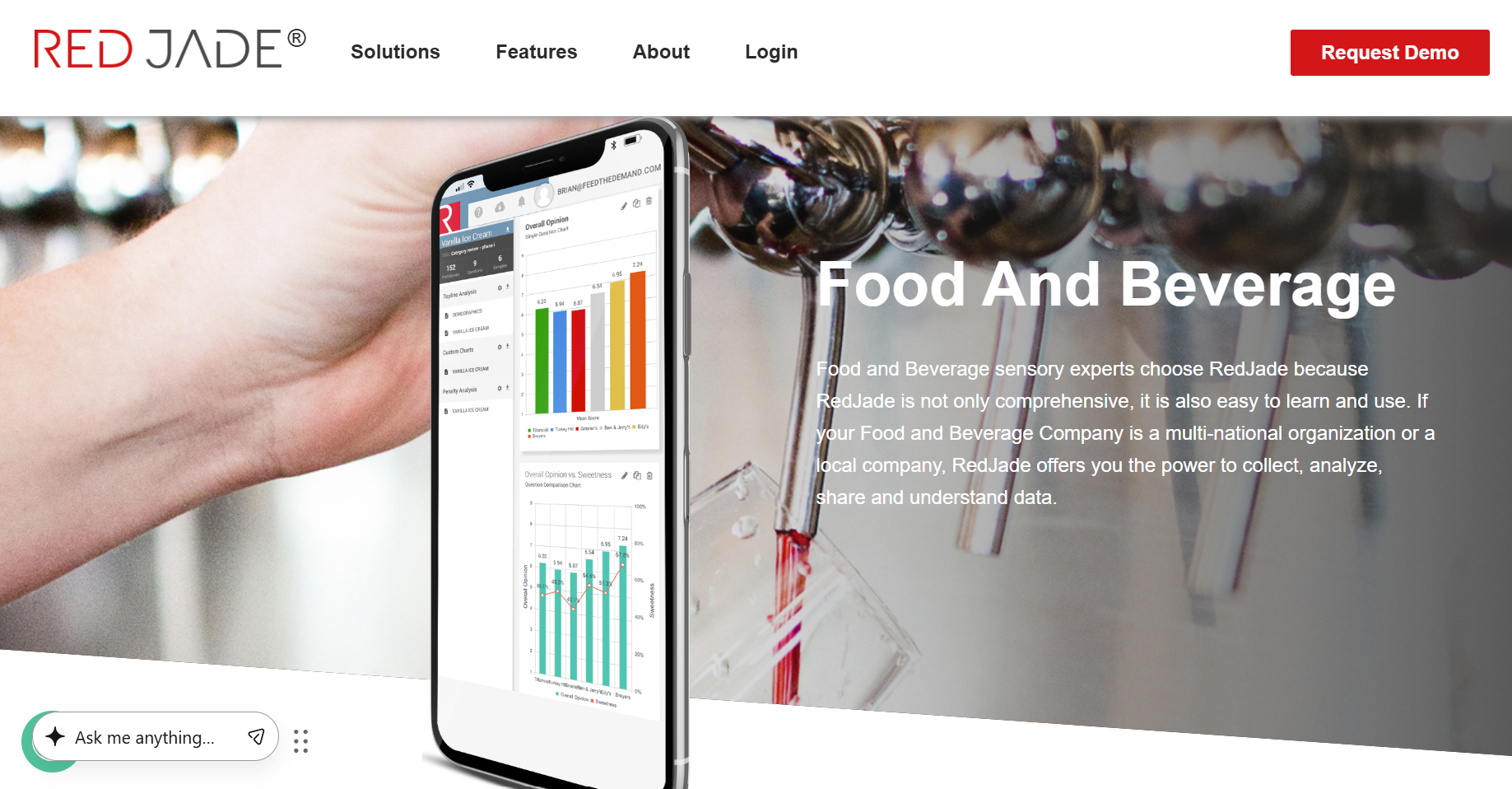
Best for: multinational food enterprises that work across time zones and require multi-language functionality.
Why it fits
Using RedJade, teams can design sensory studies, control the way in which samples are served, keep track of the testing as it is taking place, and analyze the results all on the same platform. The system supports both trained panels and consumer research, including tools to monitor panel performance over time.
Key capabilities
- LiveResults with real-time statistical testing
- PCA, control-vs-test, and panel-performance analysis
- Serving controls and multi-location monitoring
- REST API for study-data export and participant import
Strengths and considerations
RedJade stands out for combining experimental design with live analysis and detailed panel diagnostics.
Pricing and availability
Pricing is not publicly disclosed, but a free trial is available.
Evidence and review notes
G2 has only one RedJade review, rated 5/5, so there is not enough independent feedback to identify common themes.
How We Selected and Compared These Solutions
We researched these tools using public information available in September 2026, including vendor websites, product documentation, and other credible third-party sources. We did not conduct hands-on testing.
We grouped each solution by the main record and decision it supports and, across the full list, evaluated category fit, target users, core capabilities, further support, and pricing. We then applied category-specific criteria, such as labeling depth for formulation tools, lifecycle governance for PLM, and study and panel capabilities for sensory platforms. Lastly, we identified category leaders where multiple directly comparable products were included; in categories represented by a single specialist platform, we identify the product's best-fit use case rather than ranking it against absent alternatives.
How to Choose the Right Food Formulation Software
As you can see from this list, some food formulation software tools are incredibly specific. In contrast, others are more all-encompassing but may miss key features like sensory testing or focus less on compliance.
So, first, understand the specific problem you need to solve. If you have too much experimental data to make sense of and need to bring it into a more uniform structure, look at R&D or materials informatics platforms. If nutrition, labels, and recipe changes are the priority, formulation and labeling software is a better fit.
Then, look at who needs to work in the system. A small product team may value speed and simple setup, while a multi-site manufacturer may care more about role-based permissions and auditability.
The proof is in the pudding, so before committing, it’s always worth requesting a demo. Come prepared with the workflows you want to see and any questions about usage and integrations. Lastly, ask how long implementation will take, what the process involves, and what resources are available for migration and day-to-day use.
Find the Right Fit for Your Food R&D Workflow
The best food formulation software depends on what your team actually needs to control. For some, that means nutrition and labeling. For others, it is specifications across the product lifecycle or sensory validation.
For data-rich R&D teams, the challenge can be different. When experimental results are fragmented across systems, previous work becomes harder to reuse, and teams can end up repeating trial and error. MaterialsZone brings that data into a standardized knowledge base, where teams can analyze past experiments and use predictive models to guide what to test next.
Request a demo to see how your existing R&D data can help reduce unnecessary experimental iterations and support faster, data-driven formulation decisions.